Along the street of Maginhawa stands a café where food becomes medicine, art becomes therapy, and love becomes a shared act of healing to those who have been left unseen by traditional mental health care.
Trigger Warning: This article contains mentions of suicidal thoughts and suicide attempt.
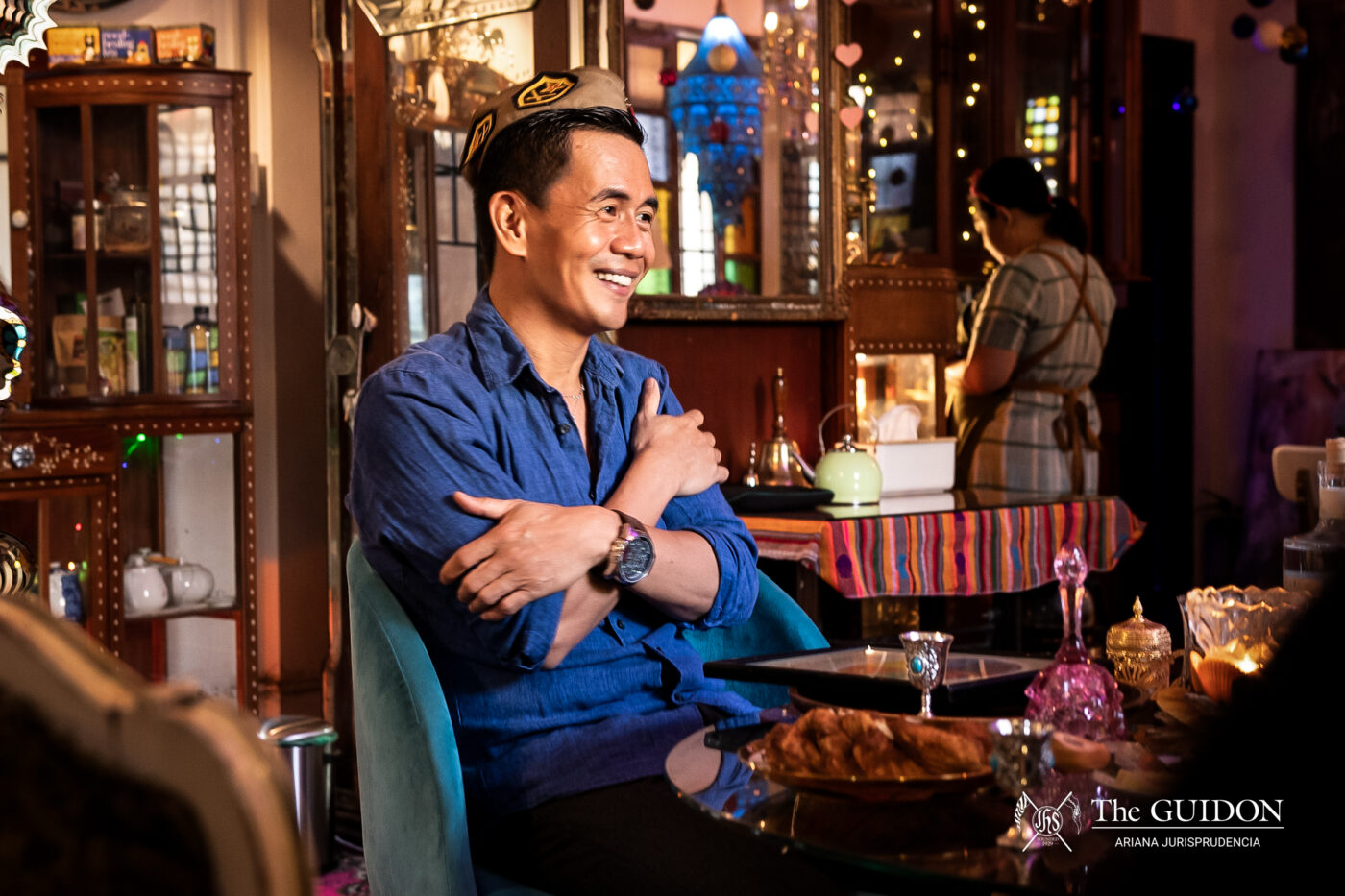
UNCONDITIONAL LOVE flows through the windows of Van Gogh is Bipolar (VGIB)—a small Maginhawa café where natural healing finds those who are left beyond traditional medicine’s reach.
Behind the café’s operations is founder Jetro Rafael, who turned to food, lifestyle, and mindset shifts to completely accept himself, after being clinically diagnosed with bipolar disorder at 28 years old.
Beyond its walls, refuges like VGIB remain rare. In the Philippines, where mental health care and intervention continues to be stigmatized and scarce, such community spaces draw people to a more communal and expressive form of healing.
Gardens to living plates
Prior to founding VGIB, Jetro, now 46 years old, was once at the brink of a life ending attempt. At first, he was prescribed synthetic medication for his mental issues. However, for some individuals, these medications can worsen mental condition due to factors like genetics or a lifestyle mismatch. Such was the case for Jetro, who turned to a different approach to healing, believing that his struggle stemmed from a deeper emotional darkness that medication only worsened.
Growing up in the valley of Isabela with his family, he spent his days between a forested backyard and a laboratory. As a child, he dreamed of being a wild gardener, fostering a deep connection with nature, and having an inclination to nurture those around him.
Jetro developed a passion for naturally grown ingredients such as honey, cacao, and raw cheese to enhance one’s production of neurotransmitters linked to happiness and calmness, which he found to improve his mood as well. This blend of nature and science inspired his philosophy of “Buhay na Pagkain (living food),” or “cuckoo diet.”
The diet, which he deems as a natural medicine, had empowered him in ways traditional mental health treatments could not. “[I was] prescribed antipsychotic drugs, mood stabilizers, anti-anxiety pills, and so on. But this is how I see it: every human being has a unique biochemistry,” he explains.
Nonetheless, he asserts that his diet is not a rejection of traditional medicine or a turn to alternative medicine. Rather, it was a radical transformation of his being towards a personalized, life-giving form of care.
Inspired by the effects of his cuckoo diet, he opened VGIB in 2009 and allowed it to grow into a home where care, creativity, and healing could be shared over the past 15 years.
What Jetro described as an “accidental business,” where he became an “accidental chef,” began with sharing meals with friends and eventually grew into a dining experience that opened his home and heart to others.
According to Jetro, the cafe’s ambiance serves to remind guests of the childlike, playful, and creative spirit in them, “Because that’s the doorway. It’s also part of unconditional [love:] to be free and expressive—without any fear of being judged.”
In furthering the cafe’s advocacy of inclusivity and healing, the restaurant also opens its doors to The Love Project before serving time at 6 PM. The project reconciles art and science to create programs that help struggling individuals who are ready to love, feel, and empower themselves.
Reflecting on this, Jetro shares, “Nobody has to prove themselves for me to welcome them.” Whether it’s street children or well-known personalities, he adds, “There is a space for everyone here. Once we remember who we truly are—our true being—we realize that we are this space of love.” This love trickles down to the food they serve, the people they welcome, and the ways they give back to the community.
Meals rooted in love
Looking back at the legacy of VGIB, Jetro speaks fondly of the many relationships he has built with his employees, loyal customers, and most importantly, his late-life partner, Robert Alejandro.
Robert was an artist who was fondly remembered in his family’s stationery business, Papemelroti. For 20 years, Robert and Jetro shared both life and work, with VGIB at the heart of their love story. Despite Robert’s passing in 2024, his art continues to live on within the café’s walls.
“The broken heart that I am carrying [from Robert’s passing] got me to where I am right now. My work is even more infused with love [and] colors,” Jetro shares.
To Jetro’s employees, VGIB was also a rare haven that welcomed those whose mental health challenges had pushed them to the margins. Mani, one of the café’s employees, is among those who find comfort and healing in VGIB.
After surviving a suicide attempt that required facial reconstruction, Mani faced discrimination when an employer withdrew a job offer upon discovering that she used antipsychotic medication.
Mani’s experience is a common case for individuals with mental conditions trying to acquire employment. Once an employer learns that an individual has a mental condition, some face discrimination regardless of their qualifications or achievements, even though there are guidelines that protect them.
A year later after facing discrimination, Mani found VGIB as a customer seeking comfort as someone who was diagnosed with bipolar disorder herself. Eventually, she connected with Jetro to contribute to VGIB, “Everyday na [pumapasok ako,] I see it as my daily miracle,” she shares.
Today, she greets every guest with a warm smile, carefully plating each dish and pouring tea as a way to ripple forward the purpose and meaning VGIB has given her. Through the warmth of Jetro, Robert, Mani, and the other VGIB employees, a home for those in need of healing continues to spread love with every person who enters the café.
Sanctuary of healing
This story of sanctuary is the very essence of VGIB: a place where food and healing meet community, and where the memory of Jetro’s late-life partner and their art endures.
In the depths of his grief, Jetro believes that he can only pour over his heart toward living in the presence of love. “As long as I’m alive and breathing, I want to continue being part of this living presence of love,” he says.
For Jetro’s employees, VGIB is living proof that healing, in all its forms, is meant to be shared, especially in a culture that views vulnerability as weakness. For Mani, she prefers to see her mental health as a ‘super ability’ rather than a ‘disability’ which she finds limiting. She adds, “As long as we’re using all these disempowering words and labels, I’m going to be your victim forever.”
Despite this, VGIB should not remain an exceptional space. Regardless of context, everyone should feel unjudged and accepted, because the love and kindness Jetro shares with his customers should be extended to everyone. The space stands as a model for the kind of environment that every community should nurture—one that offers healing, compassion, and safety for all.
While it may not be an everyday miracle, spaces like VGIB are a meaningful step toward mental health inclusion. They prove that people long for communities who nurture spaces that listen to the human spirit in hopes of being seen, fed, and healed.
Hence, when the sun rises again in Maginhawa, the café opens its door and learns to love once more, never doing it the same each time. When that love is shared and multiplied, it challenges the belief that healing can only happen in rare, extraordinary places.