FILIPINO FAMILIES are known for their close ties—bonds built on trust, nurtured by love, and sustained through years of sacrifice. For many, these relationships are a testament to mutual care, while for others, they are fortified by an unspoken promise that one day, children will return the care their parents once gave.
When discussing the values that define a Filipino, many can be traced back to the pre-colonial period, when reciprocity and mutual obligation were central to community life. However, with the arrival of colonizers, these values were manipulated. Utang na loob (debt of gratitude), a cornerstone of Filipino identity, was exploited and twisted into a tool of control, transforming genuine gratitude into a cycle of imposed debt.
Until today, the same pattern of exploitation persists—not under friars and encomiendas, but in the machinery of politics. Utang na loob has evolved into political currency, with votes exchanged for favors, truths swept under the rug for safety, and loyalty pledged for a lifetime.
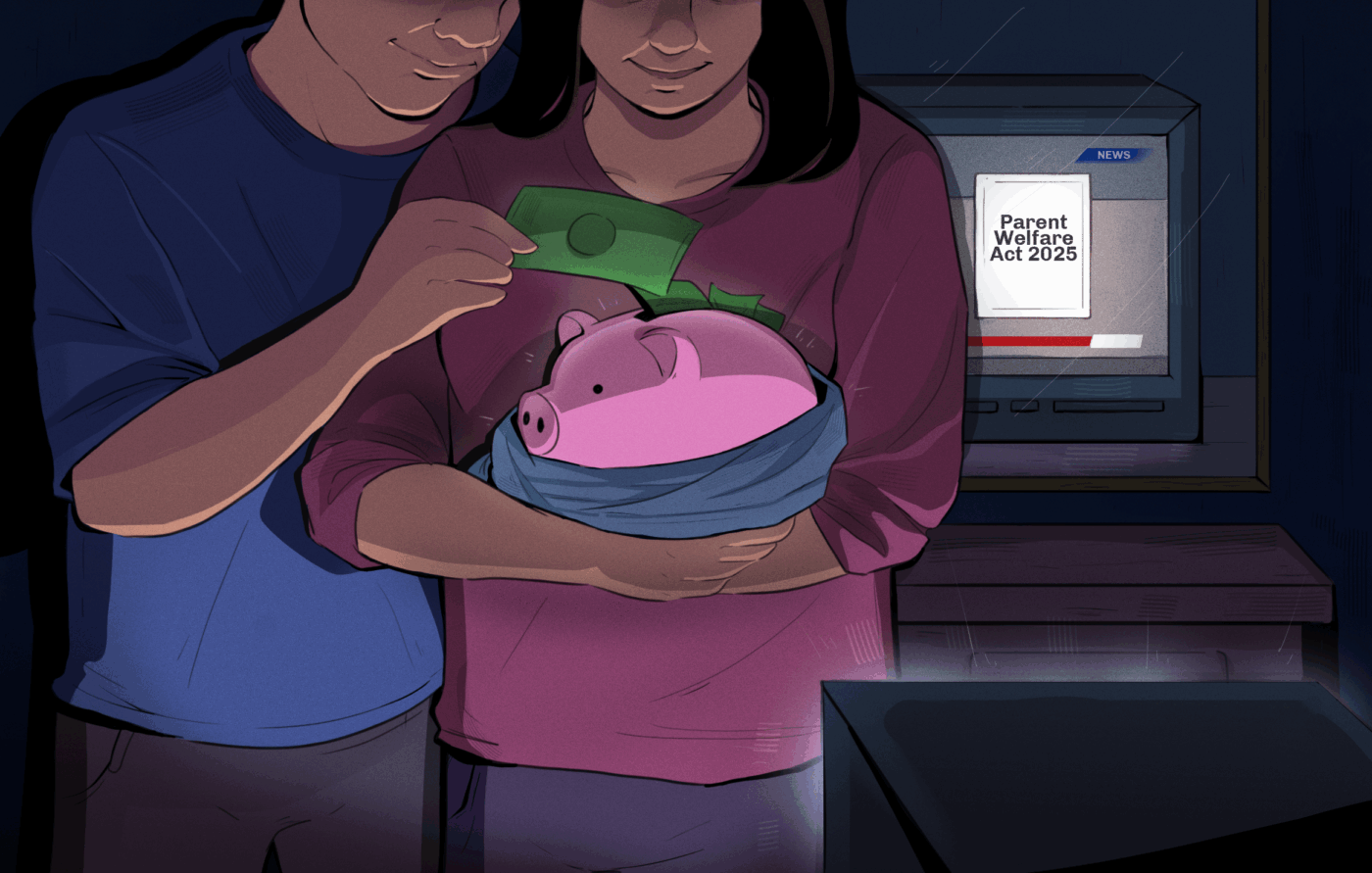
More than this, the very same pattern that once oppressed many Filipinos now seeks new ground to permeate, embedding itself in institutions, legislation, and governance. This is visible in Senator Ping Lacson’s proposed Parents Welfare Act of 2025, where utang na loob is at risk of being weaponized against innocent children.
The expectation that children must endlessly repay their parents blurs the line between love and obligation, turning care into a debt. Lacson’s proposed bill institutionalizes this expectation, presenting it not as help for the elderly, but as a tactic to mask government failure by passing its duty onto burdened families.
Bill out
Almost a decade ago, Lacson introduced the bill as the Parents Welfare Act of 2016. Due to more pressing legislative priorities, Lacson’s bill did not progress into law, leading him to refile it in 2019 and last July.
The bill, which he claims will “strengthen Filipinos’ family ties and sense of filial responsibility,” aims to ensure that elderly parents receive sufficient support from their children by constituting neglect and abandonment as a criminal offense.
One of the bill’s provisions allows parents who are fully incapacitated from supporting themselves due to old age, illness, or disability to file a petition for support against their children on the grounds of neglect or abandonment. This petition may then serve as the legal basis for issuing a support order against the children in question.
Much of the bill’s notoriety comes from the clause that children may face up to ten years of imprisonment and fines ranging from Php 100,000 to 300,000, should they be proven guilty of abandoning their parents.
Despite emphasizing the need for “sufficient cause or reason” before the court issues a support order, the bill ignores the reality that neglect or abandonment may be driven by poverty.
Notably, filial responsibility has already been legalized under the Family Code of the Philippines, which Lacson had acknowledged previously. He argued, however, that many parents are still left without adequate care as the code only provides legal obligations for filial support, whereas his bill specifically punishes those who fail to provide support.
Catch and throw
The narrow focus on utang na loob as the ideal and sole guiding principle to Filipino filial piety and morality is what the bill gets wrong. It overlooks the diverse social realities of lower to middle-class Filipino families, where the concept of support is far more complicated.
In a country where many households rely on a single breadwinner and wages remain too low to meet the cost of living, many children struggle to provide for themselves. By demanding the same thing from every household, the poorest families, who are already burdened by unemployment, inflation, and care work, bear the heaviest weight.
Beyond these economic struggles, unhealthy or abusive family dynamics further complicate the bill’s application. While Lacson clarified this matter by stating that the bill does not cover “parents who have abused, hurt, or neglected their children,” the flaw cuts deeper because the burden of proof falls on the child.
The very victim of abuse is forced to reopen wounds and relive the traumas that they have fought to survive. What is framed as protection becomes punishment, and what is presented as care becomes a cruel demand to prove their suffering before they are believed by the state.
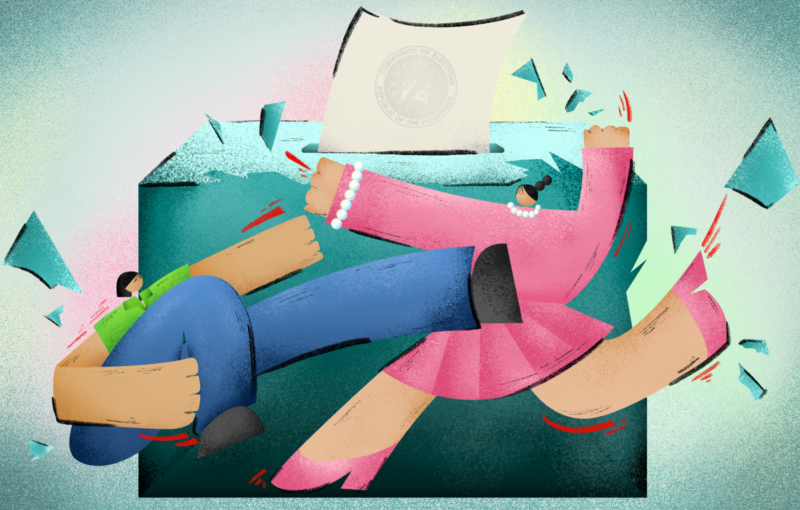
In a culture where Filipino children are expected to be the tagasalo—the savior of the family—such laws entrench cycles of sacrifice. Far from supporting Filipino families, the Parent Welfare Act turns homes into battlegrounds of survival. Too often, the weight falls on daughters, queer individuals, and women in the family, who are forced to carry expectations that wound rather than nurture.
Politics of culture
The nature of Lacson’s proposal of the Parent Welfare Act reveals an implicit admission that the government’s own funding and support for the elderly are inadequate—if not absent altogether. In shifting the duty to relatives, the state passes on the responsibilities it has long neglected.
In the Philippines, a monthly stipend of Php 1,000 is far from enough for an indigent senior citizen to cover basic needs, yet even this meager amount rarely arrives on time. For many, pensions are their only hope, while others receive no pension at all. When support is delayed or absent, the elderly are left to endure hardship after hardship.
Like many other bills, the Parents Welfare Act collapses under its own, failing on multiple fronts. It does not capture the complexity of Filipino families, nor the diversity of households already strained by poverty, gender roles, and unequal burdens of care. Worse, it weaponizes the very core and values that make one a Filipino.
The dangers of the bill lie in how it reduces elderly support from a collective responsibility to an individual burden on families. If the government truly intends to help, it should first ensure the full and timely implementation of existing laws such as the Expanded Senior Citizens Act and the Universal Health Care Act, instead of creating new ones that only mask its shortcomings.
Love and care for family are not things to be legislated—they are lived, practiced, and passed on. Families do not need coercion, only a government committed to supporting them. Care is already valued in the Filipino culture and is willingly practiced by many. Nonetheless, even in cases where this value is not upheld, the decision to provide care should remain with the child or the family, not the state.