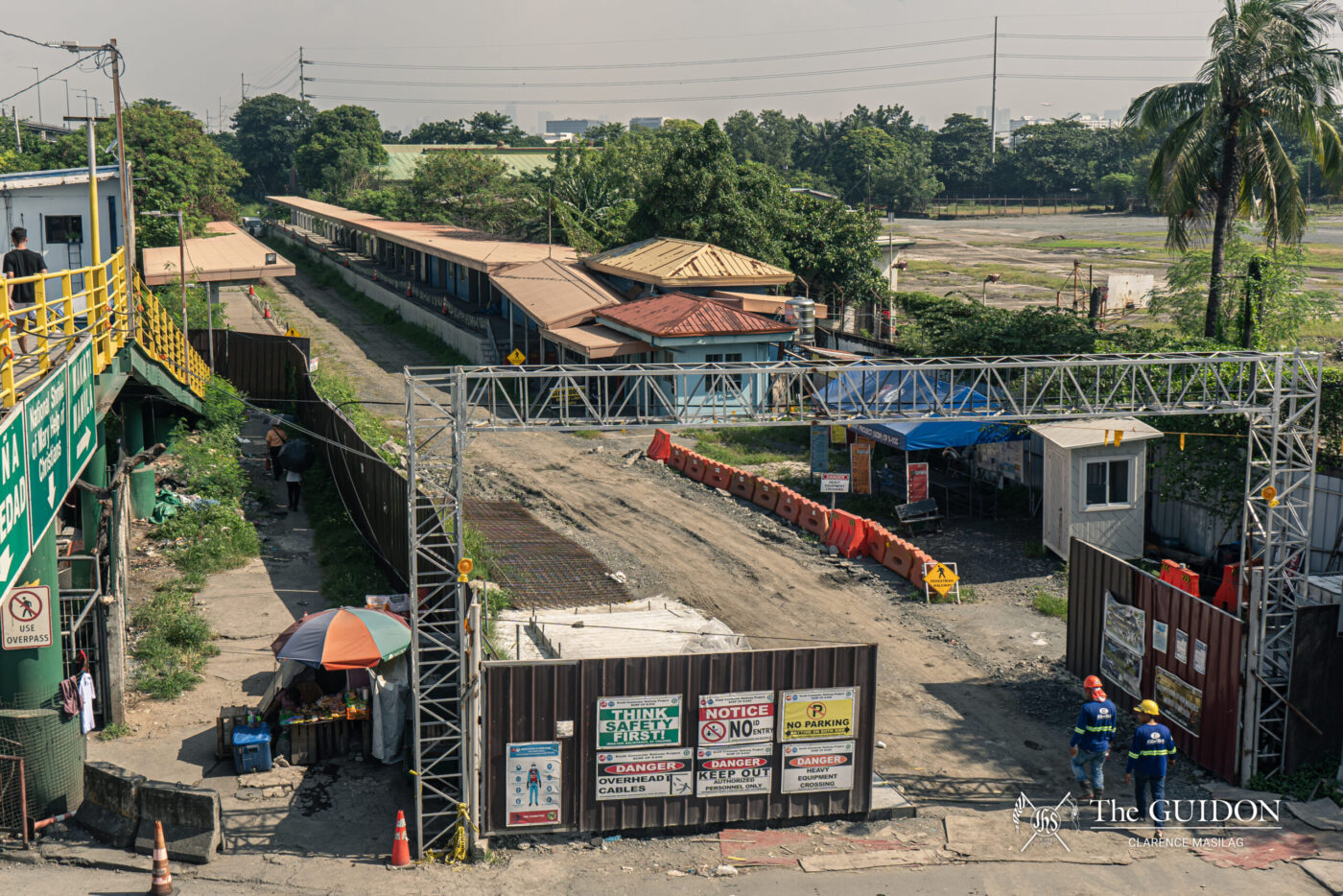
IN LINE with the “Build Better More” program of President Ferdinand Marcos Jr., the current administration has focused on infrastructure projects, especially on transportation, to bolster economic growth.
However, the future of public transportation in the Philippines remains uncertain due to persistent issues concerning the acquisition of right-of-way (ROW). This refers to the legal concept that grants a person or state access to another’s property, including informal settlers who have experienced inadequate support for relocation.
Transpo in limbo
As an expansion of the last administration’s “Build Build Build” vision, Marcos Jr. sought to prioritize infrastructure development through his “Build Better More” program. Among the flagship projects of this initiative are the Metro Manila Subway Project (MMSP) and the North-South Commuter Railway (NSCR), both of which have experienced significant delays due to the issue of acquiring ROW.
For instance, residents in Barangay Buli, Muntinlupa City, especially those with routes traversed by several railway projects, have feared eviction from their homes. These instances recur despite Republic Act No. 10752 or the ROW Act of 2016, which streamlines the process of ROW acquisition and implementation to build public infrastructure projects. Additionally, the law ensures just compensation and security for affected property owners and informal settlers.
On the intricacies of implementation, the loan guidelines set by major companies funding Philippine transportation projects, such as the Japan International Cooperation Agency (JICA) and Asian Development Bank (ADB), require full compensation of affected people before construction work can start. However, one of the ROW Act’s provisions mandates that no form of donation should be given to informal settlements; instead, they have to be relocated to a site with basic facilities and services.
Issues of implementation
Amidst the ROW Act’s mandate to relocate affected informal settlers with proper compensation, concerns continue to emerge regarding its concrete implementation and the possible repercussions of displacement.
Such disturbances had surfaced as the Department of Transportation had resettled only 1,756 of the 50,633 informal settler families (ISFs) who reside in priority railways to be constructed across the country as of late November 2024.
Concerning the ROW Act’s enforcement, Sociology and Anthropology Department Lecturer Skilty Labastilla argues that the law leaves the responsibility to local government units and national agencies to develop resettlement sites. As a result, he added that this general clause leads to fragmentation and ambiguity over who ensures the vital processes necessary for relocation.
In relation to these gaps, informal settlements are left with high socioeconomic vulnerabilities despite the law’s purpose to standardize land acquisition and lessen administrative delays.
Regarding broader implications of the law, Labastilla asserted that the administration, in strictly abiding by the ROW Act, largely risks disrupting informal work arrangements, access to markets, and mutual aid systems within the communities of informal settlers. As such, he also stressed the tendency for settlers to return to their original sites when relocation sites are inadequate and unsuitable for their well-being.
Inclusive infrastructures
In hopes of lessening construction delays, the Philippine Senate approved the “Accelerated and Reformed Right-of-Way Act” (ARROW Act), which aims to amend the previous ROW Act of 2016, on the third and final reading last June 9.
This amendment sought to include private infrastructure projects for public use, as opposed to exclusively national government projects. Moreover, the law mandates involved agencies to create a Right-of-Way Action Plan (RAP) that includes a census and profile of affected persons prior to land acquisition.
Beyond the ROW Act’s proposed amendments, Labastilla suggested synchronizing it with laws and agencies in the country to prioritize relocation planning from the start. As an example, the Urban Development Housing Act of 1992 (UDHA) aims to establish a comprehensive housing program for the underprivileged. He also mentioned the Department of Human Settlements and Urban Development (DHSUD), which is the central housing authority in the Philippines that manages settlement and relevant policy-making.
Concerning the lack of recognition of informal settlement rights, Labastilla also suggested implementing community-driven housing models and developing legal rules and regulations that clarify the treatment of settlers affected by infrastructure projects.
“Infrastructure can serve both economic growth and the right to the city, if people, especially the poor, are not treated as afterthoughts but as co-creators in development,” Labastilla asserted.
Aside from standardizing the acquisition of right-of-way, developing transportation ultimately necessitates inclusivity—one that holds infrastructure to be accessible and participatory.