AS RESTRICTIONS tighten and harassment against detainees continues, the country’s political detention system reveals a democracy increasingly intolerant of dissent.
In recent times, patterns of repression have become more systematic, ranging from prison authorities blocking humanitarian aid for political prisoners to an increase in surveillance of their families and supporters. These systematic repressions go further as the state now weaponizes legal, bureaucratic, and militarized means, turning civic opposition into criminal liability.
Emerging patterns
Across the Philippines, critics of the government are increasingly labeled as terrorists without clear evidence or due process. Activists, youth organizers, labor leaders, and indigenous educators are often red-tagged through the National Task Force to End Local Community Armed Conflict (NTF-ELCAC), a nationwide initiative for achieving inclusive and lasting peace. However, the NTF-ELCAC has faced criticism for using its social media platform to brand dissent as rebellion.
Additionally, the Anti-Terrorism Act worsens portrayals of opposing views, as it grants law enforcement broad powers to define and address terrorism, permitting warrantless arrests based solely on terrorist identification.
State propaganda adds to this climate of red-tagging by portraying dissenters as threats to peace and security, blurring the line between activism and rebellion, and justifying repression through state apparatuses.
These state apparatuses turn civil society work into grounds for surveillance, harassment, and arrest, with activists often targeted in raids that allegedly uncover firearms. These items are then used as a basis for accusations of illegal possession of firearms or murder, carrying harsh penalties and prolonging detention.
An example is Frenchie Mae Cumpio’s case, a community radio broadcaster who reported on alleged abuses and human rights violations by law enforcers. On February 7, 2020, she was arrested due to an accusation of illegally possessing firearms and explosives, as well as financing terrorism. She denied the allegations, arguing that the evidence was planted to incriminate her.
The pattern of linking activism with criminality not only erodes legal safeguards but also normalizes the use of fabricated evidence as a tool for silencing dissent.
Detained by design
These repressive strategies stem from a long history of the state blurring the line between lawful prosecution and political persecution. According to the National Union of Peoples’ Lawyers Secretary-General Atty. Kristina Conti, this tactic has persisted across administrations, rooted in counterinsurgency and counterterrorism programs that target dissent in the name of national security.
Conti explained that authorities charge not only activists but also nonactivists—essentially anyone who dares to speak up. “[An] activist [is targeted] because it’s someone who spoke up. And so we see the pattern that the government is trying to say that anybody who speaks up is an activist,” she expounded.
This logic enables state officials to criminalize speech and assembly under laws like Batas Pambansa Blg. 880 (BP 880). Originally intended to safeguard peaceful assembly, the BP 880 has instead been used against demonstrators through permit requirements and peace maintenance clauses. According to Conti, these become the basis for criminally charging political organizers in cases of “perceived noncompliance.”
Once charges are filed, the judicial process itself becomes a tool of attrition. Conti noted that political prisoners often face multiple overlapping charges, ensuring that even if one is dismissed, another keeps them detained. Moreover, hearings that should proceed within strict timelines—as mandated under the Speedy Trial Act—are delayed by congested court dockets and pandemic backlogs.
Likewise, Kapatid spokesperson Fides Lim highlighted that detainees without private counsel, often relying on the overburdened Public Attorney’s Office, are pressured into plea bargains. She explained that this practice compels them to admit guilt and accept conviction for crimes they did not commit—a reality she said has become increasingly common.
Together, the delays and coerced pleas reveal a justice system that punishes Filipinos who dissent not through verdicts, but through the very process meant to ensure fairness.
Without structural reforms to curb these legal provisions, pre-trial detention will continue to function less as a neutral holding period and more as a slow sentence in itself.
Locked up liberty
These distortions of justice ultimately converge in political detention, where dissenters are punished not for crimes but for what they represent. Lim asserted, “The state of the political prisoners is a microcosm of the broader state of civic and democratic freedoms. Human rights are recognized more in the breach than in practice.”
This repression extends beyond prosecution and into the daily conditions of incarceration. Political prisoners are frequently the first targeted during “greyhound” searches, with their cells and bedding ransacked despite no involvement in illegal drugs. Lim recounts cases of solitary confinement, which is prohibited under the UN Standard Minimum Rules for the Treatment of Prisoners.
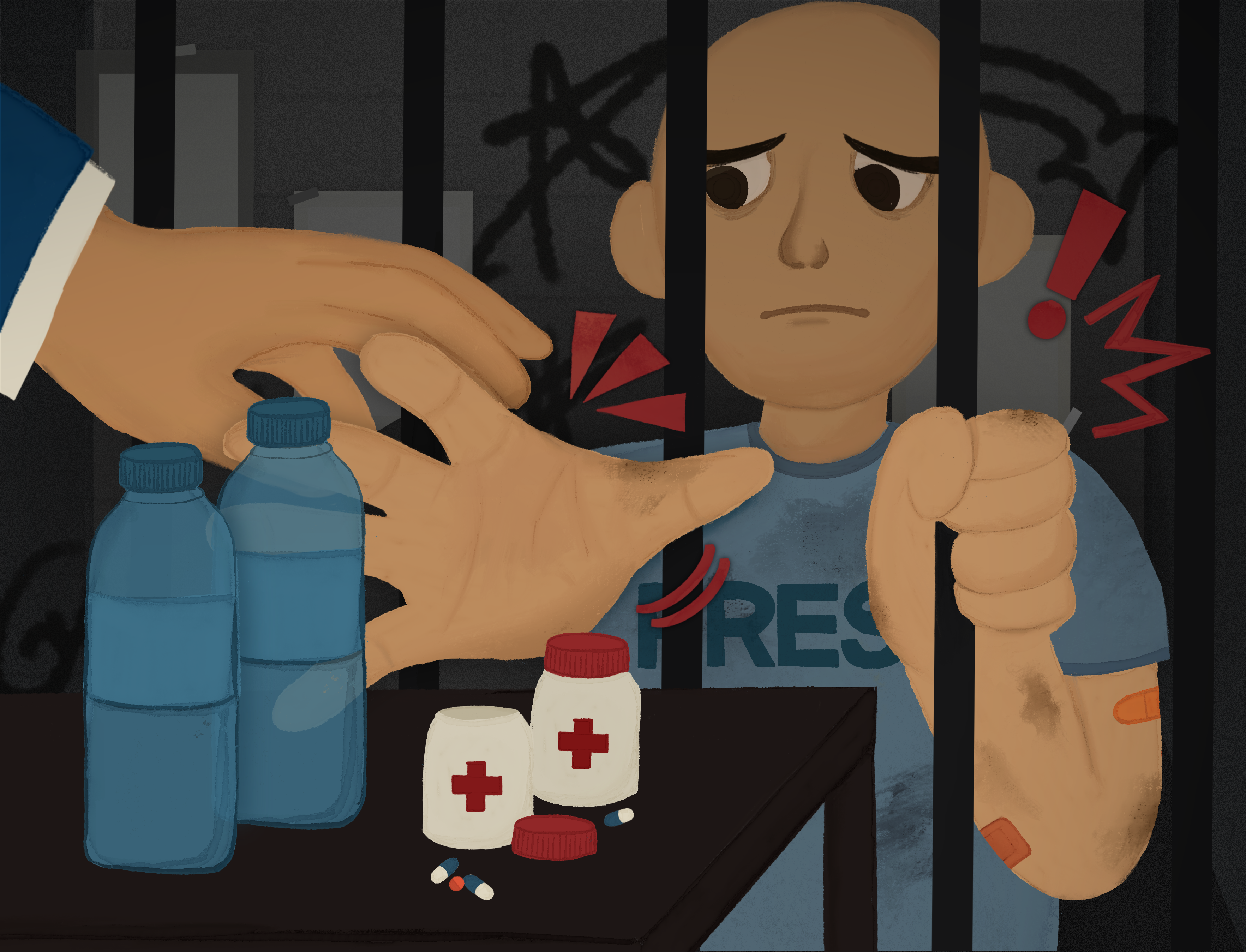
These conditions, further worsened by the denial of basic needs, are compounded by the routine obstruction of what Lim calls “mere humanitarian assistance.” According to her, many detainees survive on just two cups of rice a day—proof that if poverty starves people outside prison, incarceration starves them even more.
Confronted with these realities, Lim highlighted the necessity of resistance against a system that dehumanizes detainees, criminalizes dissent, and weaponizes the law. “We have to do it because someone has to do it,” she argued.
As democratic safeguards become harder to demand amid shrinking civic space and intensified state repression, the fight for political prisoners’ rights and release becomes increasingly inseparable from the broader struggle to preserve democratic participation.