AIMING TO strengthen the University’s digital landscape, the Office of the Vice President for Digital Information and Technology Services (OVP-DITS) held a town hall last September 16 at Faber Hall 101, where they elaborated on their plans to bolster cybersecurity and digital infrastructure.
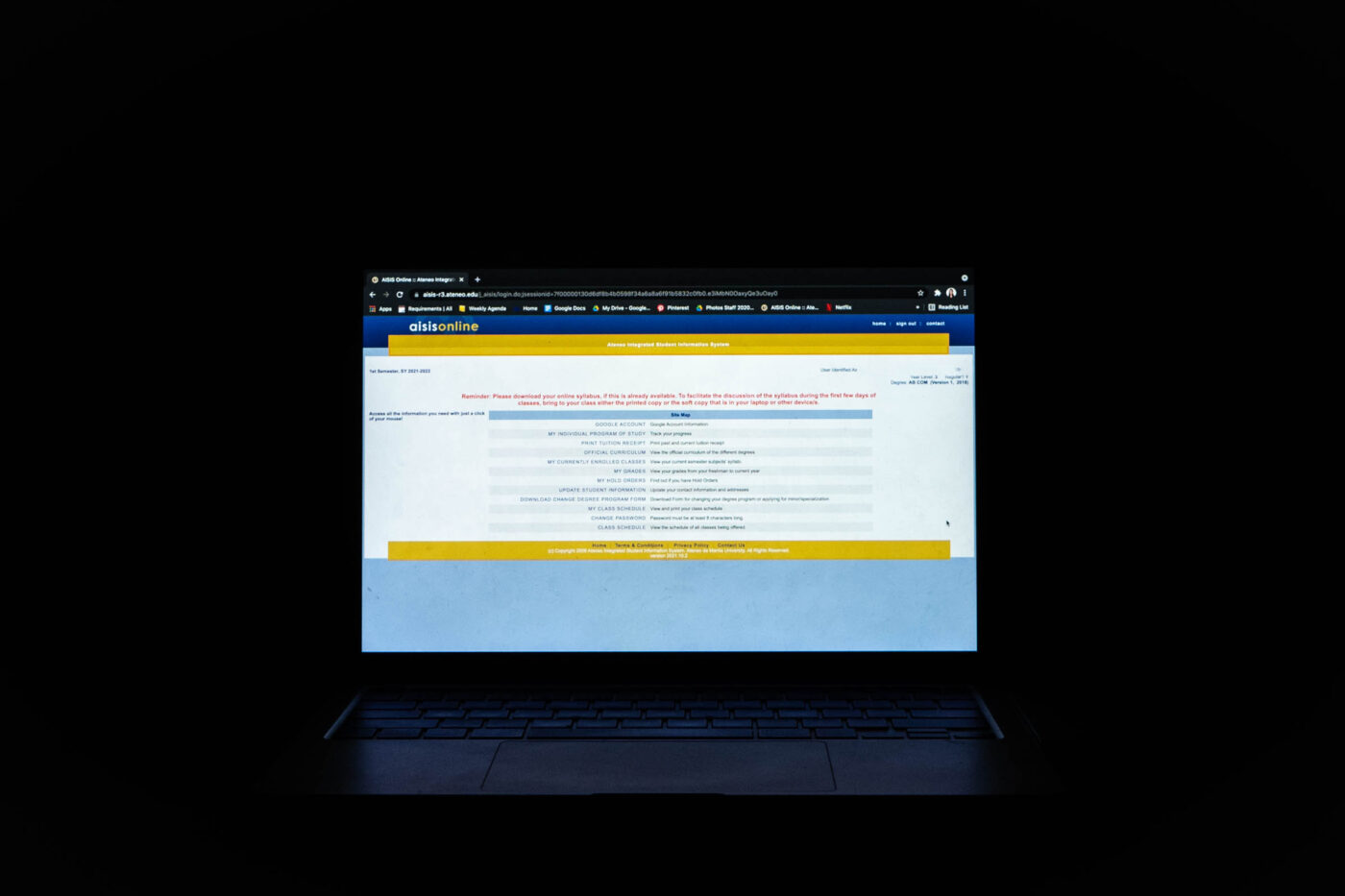
Among these initiatives is Ateneo Student 360, which Vice President for DITS Janice Bello described as a system designed to unify aspects of the “student journey” in one platform—from the basic education to the undergraduate level. Notably, Bello stated that the new system includes an enlistment platform that will replace the Ateneo Integrated Student Information System (AISIS).
Outlining the project timeline, Bello said that the University aims to lay the groundwork for the system by the first semester of AY 2026–2027. Once this is accomplished, the OVP-DITS plans to select a provider by AY 2027–2028, with the project’s full implementation targeted by AY 2029–2030.
New student system
Beyond Ateneo Student 360’s role in enlistment, Bello mentioned that it aims to function as an integrated, “student-centric” system that will facilitate academic and administrative services such as admission, enrollment, and career development.
Bello further added that replacing AISIS is necessary to align with current cybersecurity standards and to serve student needs. She explained that the current student system is already “past its intended life span,” citing flaws such as functionality errors and issues in accessing partner websites like BluPHR during enlistment.
However, she noted that major changes to AISIS may only be implemented after University-wide consultations on enlistment. In the meantime, she said that the OVP-DITS will work to keep AISIS stable until Ateneo Student 360 is ready.
While acknowledging the University’s efforts to improve digital infrastructure, Sanggunian Vice President Jedryc Romero recognized the need for consultation to ensure that the OVP-DITS’ initiatives address student concerns.
Echoing these hopes, Bonnie de la Paz (4 AB Dip IR) emphasized the importance of consistent information dissemination and student involvement.
“Even with plans for [digital] change now revealed, I feel it’s important that students […] keep DITS accountable on whether or not their plans can live up to the promise of streamlined digital services,” de la Paz stressed.
Efforts in cybersecurity
Apart from plans for the new student information system, Bello acknowledged the OVP-DITS’ challenges in achieving digital transformation, including cybersecurity risks, weak internet connectivity, and outdated systems.
Elaborating on these challenges, the OVP-DITS reported that the University’s current firewall system blocked over 61 million malware attacks from April to May.
To maintain the safety of the University’s networks, Bello emphasized the need to update digital infrastructure while strengthening cybersecurity. As such, she explained their ongoing efforts to expand Wi-Fi coverage across the Loyola Heights and Salcedo campuses.
Moreover, Bello mentioned that the OVP-DITS plans to implement “a couple of security projects and […] [infrastructure] initiatives” by May 2026 to improve the speed, security, and connectivity of the University’s digital systems.
Particularly, Bello said that they finished Phases 1 and 2 of the Wi-Fi connectivity expansion, which covered the University dormitories, as well as classrooms and offices in the Ateneo Grade School, Blue Eagle Gym, Rockwell campus, and Loyola Schools complex.
For Phase 3, Bello mentioned that the OVP-DITS is targeting the replacement of old Wi-Fi systems and the implementation of new log-in setups for the Magis, Guest1, and OBF Wi-Fi networks by the end of AY 2025–2026, second semester.
Bello also added that they are currently planning to boost the mobile signal inside campus buildings. Notably, she stated that the OVP-DITS expanded overall outdoor coverage across mobile service providers from 83% to 98%, citing their partnership with Globe Telecom and Smart Communications.
With these initiatives, Bello noted that “there’s no perfect project,” underscoring that changes with their current plans are bound to happen during implementation. Moreover, Bello emphasized the OVP-DITS’ goal to build more reliable and efficient digital infrastructure, while noting that achieving this would require the collective effort of the Ateneo community.