EVERY BIRTHDAY is also a commemoration when you’re born on the day of the Martial Law proclamation. I did not realize it then, but each revolution around the sun meant getting closer to another Marcos administration.
Every year also meant that our generation was moving farther away from that historical event. Enough time must have passed for us to eventually, and unfortunately, go full circle, as we’re now commemorating Martial Law with the late dictator’s son as the president.
Ironically, it’s almost as if every commemoration has a decrease in connection between the youth and the collective memory of the dictatorship. Now, remembering Martial Law for most young people means sharing a few posts on social media, creating an output about it for course participation points, and putting on a black shirt.
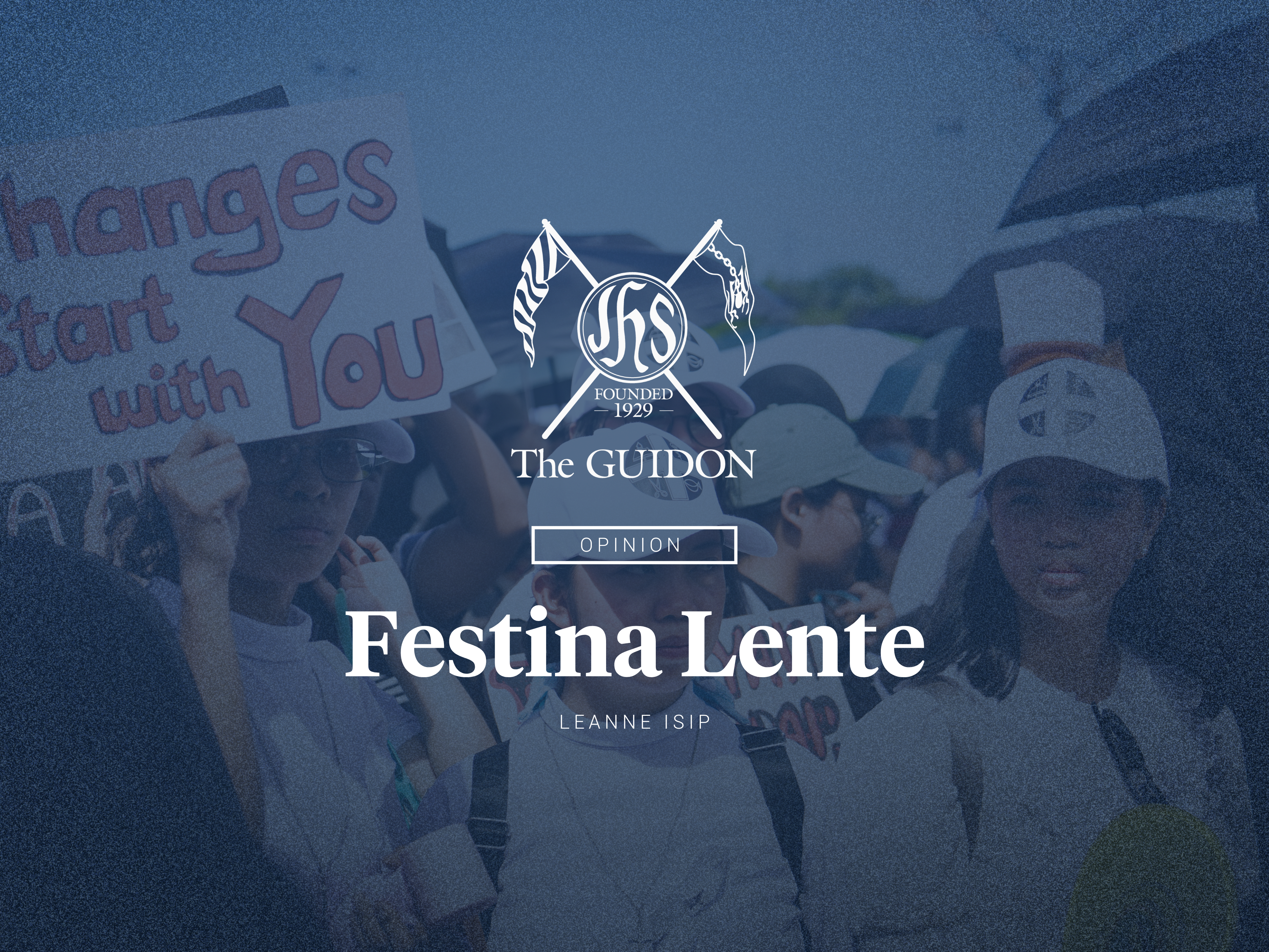
This response is not due to the lack of several engagement initiatives from different organizations within and outside the University. While the Trillion Peso March, Billion People March, and walkout during the Black Friday Protest showed engagement from Ateneans and coincided with Martial Law commemorations, people were mainly marching for an end to the corruption in flood control projects.
What can we do to strengthen our collective engagement with Martial Law? What do we do when people are aware, but not deeply enough? How do we deal with facts about the Martial Law being reduced to dates, statistics, and key words: atrocities, ill-gotten wealth, and cronies.
At least there is a level of engagement within the Ateneo community, as I saw the Ateneo Martial Law Museum’s posts receiving regular engagement on its posts regarding commemoration events. This level of interest could not be said with other commemorations or holidays.
The Friday before National Heroes’ Day, I overheard a conversation between two students while walking along the sidewalks of Loyola Drive. One of them mentioned that they needed to go to campus on the 25th, while the other replied that there are no classes on that day because of a holiday.
“Anong holiday?” the latter asked.
“Basta, meron.” The former replied.
There is something alarming when students immediately think of class suspensions whenever there are commemorations or holidays. While this reaction, in my observation, reflects students’ desire to catch up on academic work, rest, or even save money, it echoes a more urgent issue.
We need to go past raising awareness. People know Martial Law happened.
Not remembering history is dangerous. Remembering it but not caring enough is worse. We care enough to wear shirts and to share posts on social media, but the majority do not care enough to educate ourselves and ensure that the awareness translates into action—by holding those who were instrumental in Martial Law accountable through all means.
I was born 31 years after Marcos Sr. declared Martial Law. As a birthday wish for years to come, I wish that Martial Law will no longer need a commemoration because it is already embedded in our memory as a nation.
Leanne is an AB Communication senior at the Ateneo de Manila University set to graduate in 2026. With her passion for multimedia reporting, she endeavors to share people’s stories with the world in hopes of bettering it. She dreams of an equitable society where every single person’s needs for realizing their full potential are met.
Editor’s Note: The views and opinions expressed by the opinion writer do not necessarily state or reflect those of the publication.