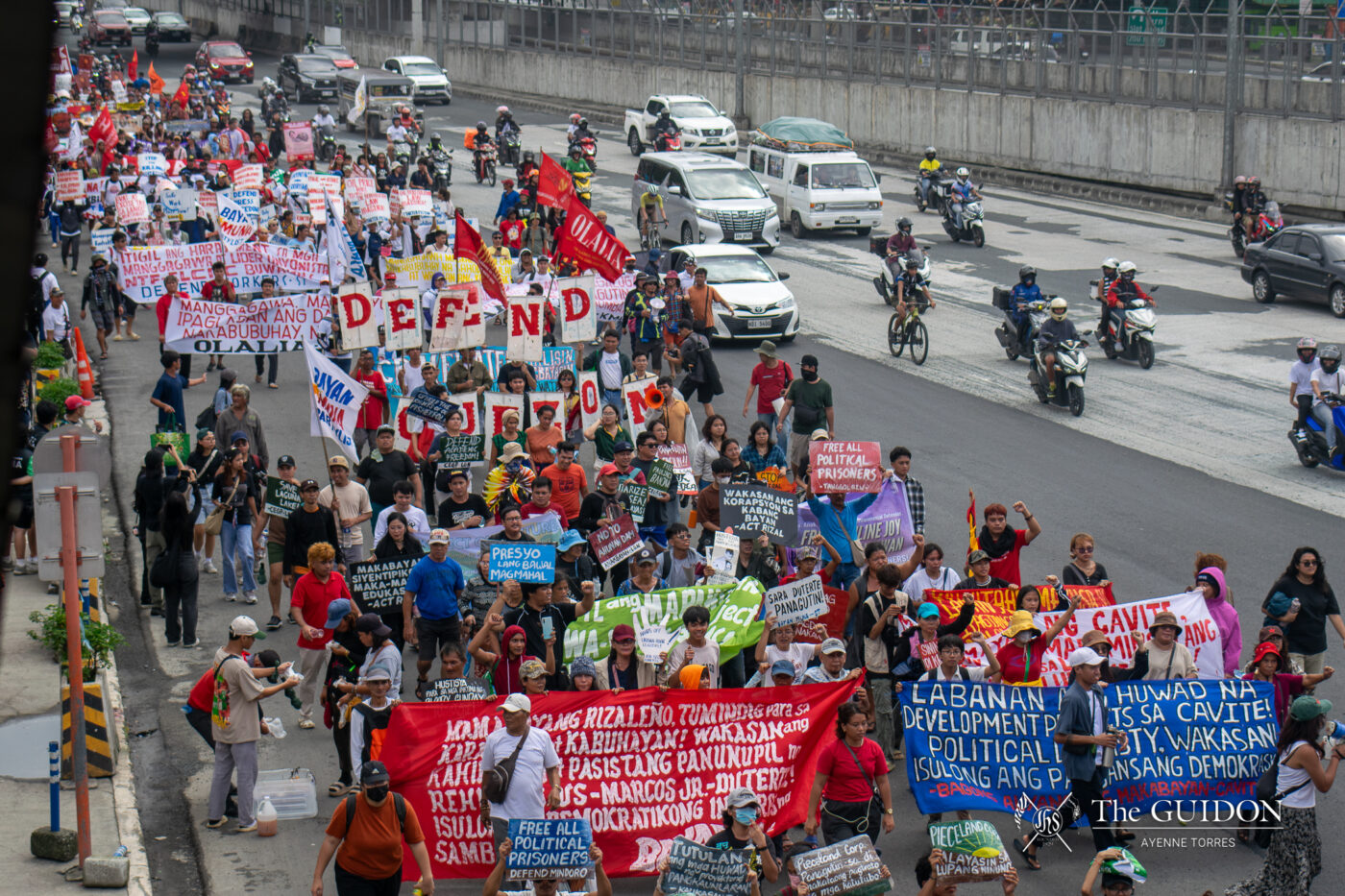
For many Filipinos, the State of the Nation Address (SONA) has become a ritual of defeat—an annual recollection of unaddressed problems and a pushback against the government’s unfulfilled potential. Yet for President Ferdinand “Bongbong” Marcos Jr., it is a chance to rebuild an administration that has been bruised politically and symbolically.
Prior to his fourth SONA, Marcos had suffered losses in Senate influence and public trust. The 2025 Midterm Elections exemplified this, as the rival Duterte camp secured significant Senate foothold despite political blows from Vice President Sara Duterte’s impeachment case and former president Rodrigo Duterte’s looming ICC trial. Moreover, critics and progressive groups continue to scrutinize the sustainability and integrity of the President’s plans, such as the Php 20-rice promise and his touted economic development roadmaps.
With scrutiny piling up against him, Marcos responded with his fourth SONA, which read like a performance of political restoration rather than the usual reports.
Between optics and outcomes
From the outset of his speech, Marcos adopted a self-critical tone, acknowledging public dismay over economic improvements that remain largely unfelt on the ground, despite government claims.
Even with easing unemployment and inflation rate falling within the 2–4% target, low-income consumers continue to suffer from undercut social protection, persistent price hikes, and wages that lag behind living costs. By admitting this drawback, the president frames his administration’s achievements and plans as concessions to public discontent.
“Ang leksyon sa atin ay simple lamang: kailangan pa natin mas lalong galingan, […] mas lalong bilisan,” he stated. (The lecture here is simple: we need to do better, […] move faster.)
Casting himself as receptive to public concerns, Marcos presented key action plans—many of which were backed by figures—tied to pressing issues across major sectors. These include increased investor confidence in business, a “proven possible” Php 20 rice price alongside a Php 113 billion agricultural investment, and expanded healthcare coverage through zero balance billing. The president also cited continued support for free college tuition and digital classroom infrastructure. Besides this, he also spotlighted the Bataan-Cavite Interlink Bridge, which is expected to cut travel time to 45 minutes.
Beyond projecting numbers and symbolic achievements, Marcos repeatedly invoked unity away from coalition politics, appealing instead to a shared Filipino identity. “Isantabi muna natin ang ating pagkakaiba,” he asserted. (Let us set aside our differences.) This framing bolstered a decisive image as he criticized budget bills that did not align with the National Expenditure Program and declared a crackdown against corruption in flood control projects.
This same narrative approach, however, allowed him to sidestep key issues beneath his goals. In particular, he highlighted economic gains without commenting on the implications of the latest US tariff deal, reaffirmed agricultural support without addressing the lack of a coherent industrial policy, and praised a stronger defense sector without grounding it in the Armed Forces’ Self-Reliant Defense Posture Law.
As the president leaves these concerns in the background, a gap remains between the optics of a rebranded unity, dressed in the language of a “Bagong Pilipino,” and the unresolved difficulties that define the ordinary Filipino’s life.
Pending progress
While the SONA projected a narrative of the Philippines moving forward, the president’s claims of development were met with skepticism by Filipinos who continue to grapple with the weight of everyday realities.
Among these claims was the touted success of the Kadiwa program, which Marcos framed as a win-win for consumers and farmers through lower food prices and increased income. However, this projection contrasts sharply with the realities of farmers who are burdened by artificially low market rates caused by the Php 20-per-kilo rice. Despite claims of buying palay at Php 23 per kilo, many farmers report being forced to sell a kilo of their harvest for as low as Php 14 due to traders and poor access to National Food Authority procurement.
Healthcare was similarly presented as a pillar of progress, with Marcos spotlighting improved PhilHealth benefits, such as free dialysis, expanded transplant coverage, and increased support for outpatient care. While such services may have expanded on paper, hospitals nationwide report prolonged reimbursement delays, with PhilHealth accumulating Php 59.6 billion in unpaid or denied claims from 2018 to 2024. Moreover, the healthcare system remains burdened, as underfunding and chronic understaffing persist in hospitals.
Marcos also framed transportation as a legacy project, promising the return of the “Love Bus,” with free rides that revive accessible public transit. However, what remained undiscussed were the rollout plan, route coverage, or consideration of the country’s car-centric urban design. While road projects under the Department of Public Works and Highways were highlighted, the absence of a comprehensive mass transport strategy left key transport issues unresolved.
Across these sectors, many of the SONA’s promises remain in various stages of delay, partial fulfillment, or vague projection. With timelines rarely specified and impact data often missing, the question remains whether these promises will materialize beyond paper, and if so, for whom.
Strategic silence
Amid these uncertainties, equally notable were the topics the president chose not to mention. This points to the missing mention of Vice President Sara Duterte’s impeachment case, despite its wide-reaching political implications. Prior to the SONA, the Supreme Court effectively halted any trial proceedings until 2026, ruling the House complaint as “unconstitutional.” Even as the president emphasized integrity and public trust, his silence on one of the year’s most high-profile governance crises undermined the credibility of his calls for accountability.
Similarly, the growing issue of gambling remained unacknowledged despite mounting public concern. In the past year alone, numerous bills have called for tighter regulation or outright bans, citing the social costs of gambling-related crimes, addiction, and money laundering. Groups from both civil society and the church have also been vocal about the industry’s deepening influence, yet Marcos offered no plans or policy reforms in response.
In a similar vein, the concerns of Indigenous Peoples were also unmentioned despite their historic and ongoing marginalization. Groups like Balay Mindanaw described the omission as a missed opportunity to affirm respect for the country’s “original stewards.” Across the country, indigenous communities continue to face unresolved ancestral land claims. The administration’s disregard for these issues, coupled with stalled progress on critical peacebuilding milestones, like the first Bangsamoro parliamentary elections, has left advocates disappointed.
Although economic inclusion was a major theme throughout his address, Marcos failed to speak on long-standing labor demands, such as the proposed Php 200 legislated wage hike. In the face of rising worker resistance, the administration maintains its focus on business-friendly policies and entrepreneurship training, sidelining urges for systemic labor reform.Rather than acknowledging these structural gaps, Marcos closed his fourth SONA with a call for unity and national character, invoking the “Bagong Pilipino”—a citizen he described as “likas na matapang, magaling, masipag, matibay, at mabuti.” (“naturally brave, skilled, hardworking, resilient, and good.”) Still, he offered no clear indication of what kind of government Filipinos can expect in return. With his term meeting the halfway point, the vision of a “New Philippines” is increasingly scrutinized not by aspiration alone, but by how well its promises hold up under pressure.