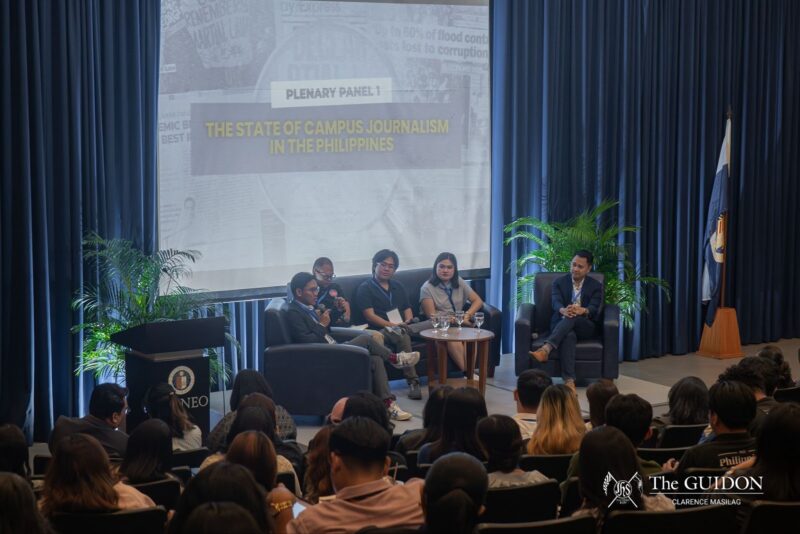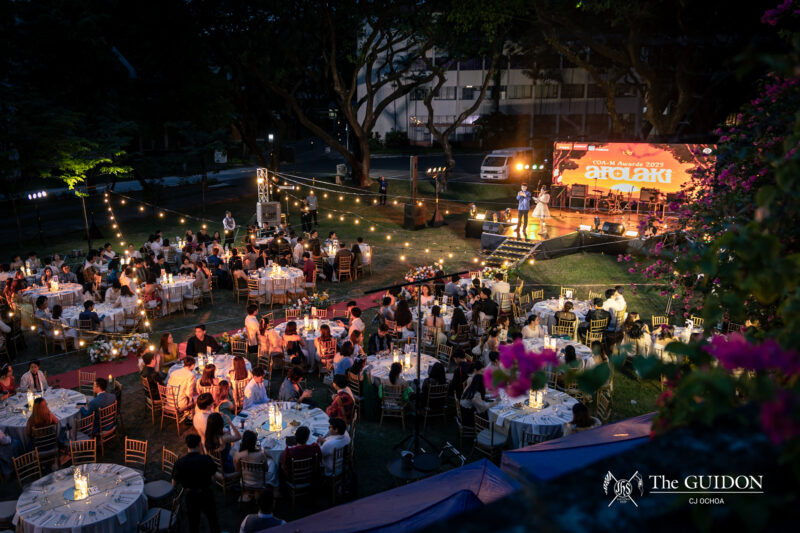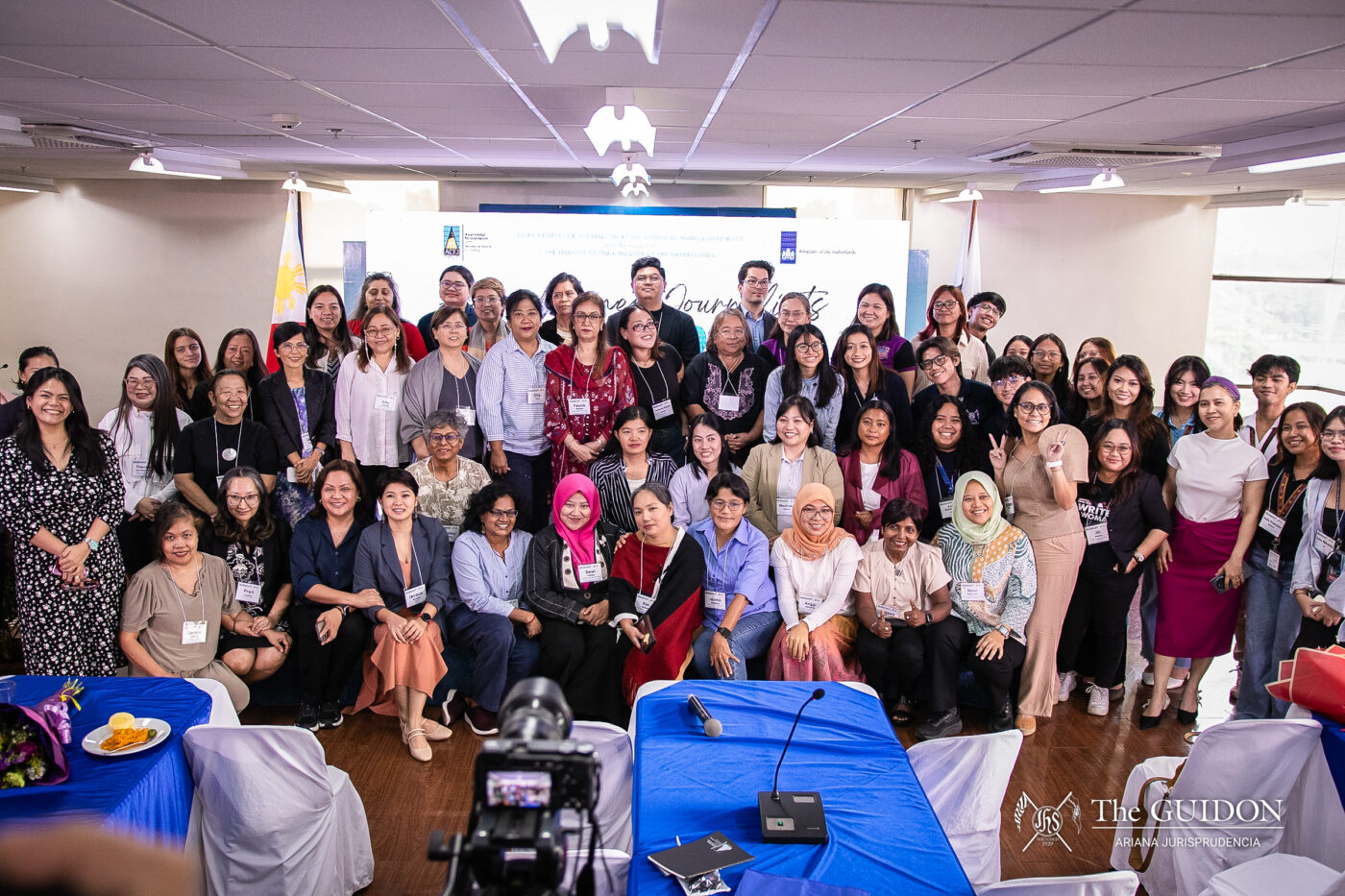
ADVOCATING SAFER spaces for women journalists, the Asian Center for Journalism at Ateneo (ACFJ), together with the Embassy of the Kingdom of the Netherlands, hosted a regional conference on August 7 to tackle gender, safety, and press freedom issues in the current media landscape.
To contextualize the event’s goals, ACFJ Director Arlene Burgos, MA, emphasized that the conference aimed to help bridge the gaps in addressing gender-based discrimination faced by women journalists.
Similarly, Embassy of the Kingdom of the Netherlands Senior Policy Officer Jaymie Reyes, LLM, affirmed that the conference was a safe space to find support from the community and challenge the norms that allow gender-based discrimination to occur.
Women in journalism

In support of the call to confront inequalities women journalists face, Ateneo Communication Department Chairperson Christine Cox, PhD, outlined the findings of her research with retired Communication Department faculty Luz Rimban, MA, entitled, “Newswomen’s Profile: Exploratory Research on the Situation of Filipino Women Journalists.”
The study revealed key findings such as women journalists facing multi-layered risks inside and outside their workplace, enduring harassment and misogyny that are often left unreported or unaddressed, and the growing threat of digital harassment in today’s context.
With these insights, Cox stressed that there should be collective action and real policy changes for women journalists to feel safe in their workplace.
Echoing the call for gender empowerment in the media industry, Rappler Community Head Pia Ranada, Cignal broadcast journalist Gretchen Ho, and freelance journalist Jofelle Tesorio shared their experiences after years of reporting.
Ho recounted her experiences covering former president Rodrigo Duterte’s arrest in The Hague and the Kingdom of Jesus Christ manhunt in Davao, highlighting her encounters with “media warriors,” who carry their own cameras and do their own reportage during on-the-ground coverages. She also mentioned the harassment and accusations of bias thrown at her as part of mainstream media.
“In these coverages, […] you have to be hyperaware because now it is not just the reporters and the journalists who have their cameras with them, they also have a camera turned at them. […] I’ve always wondered after that coverage, what if we were boys? […] Would they have faced the same kind of harassment?” she pondered.
Ranada, on the other hand, recalled her formative years as a Malacañang correspondent during Duterte’s presidency, citing that she and Rappler were banned from covering presidential events and entering the Palace. She also recounted that during Malacañang press corps deliberations on condemning the ban, a smaller faction opposed taking a stand.
She noted that this experience made her realize how divided the media industry is and that there is still a lot to be done in unifying it, which could result in a stronger culture of press freedom and accountability.
With the challenges she faced during those years, Ranada emphasized the importance of finding a support system as journalists and of actively calling out harassment and misogyny in both newsrooms and digital spaces.
Toward safer spaces

Following the conference talks, attendees expressed that they resonated with the speakers’ insights, echoing their advocacies for safer spaces and improved institutional support.
For one, Philippine Collegian layout artist Althea Natividad reflected on her time as a student journalist, sharing that she resonated with the stories of mistreatment. She also learned from the conference about the available legal actions offered by the Commission on Human Rights and the Commission on Women.
“As a student journalist, I think I could […] share [my learnings with] my colleagues and integrate more of the ideas […] of having mental [health] check-ups or disposition checks for women journalists [in our publication],” Natividad emphasized.
Meanwhile, University of the Philippines-Diliman College of Media and Communication Dean Ma. Diosa Labiste, PhD, highlighted the importance of exploring the media landscape to assess how widespread the effects of gender-based violence online are, and to develop a focus analysis and possible interventions through policy making.
Echoing her aim for the conference to bridge gaps in addressing gender-based discrimination, Burgos left aspiring women journalists with a message of hope. She encouraged them to “enter [the] field with an open mind and open heart,” urging them to build strength for the challenges ahead and reassuring them that they are not alone.