Whether they win or lose in the 2025 Midterm Elections, electoral underdogs such as the Makabayan bloc demand change from below in a flawed political system.
PHILIPPINE ELECTIONS’ representation of the masses has worsened over time, says University of the Philippines Diliman Political Science Associate Professor Jan Robert Go, PhD. He laughs frustratedly as he explains how the party list system—meant to carry often ignored interests—has been hijacked by political dynasties.
While non-dynastic party lists with deeper ties to their constituencies exist, elections now are a battle of resources—one that dynastic party lists dominate with funding from “[other] traditional political activities.”
The 2025 senatorial campaign of sectoral party list Makabayang Koalisyon ng Mamamayan (Makabayan) is one example of this reality. It relies on contributions and donations because, as program and analytics volunteer Xian Guevarra notes, they “barely have funding.”
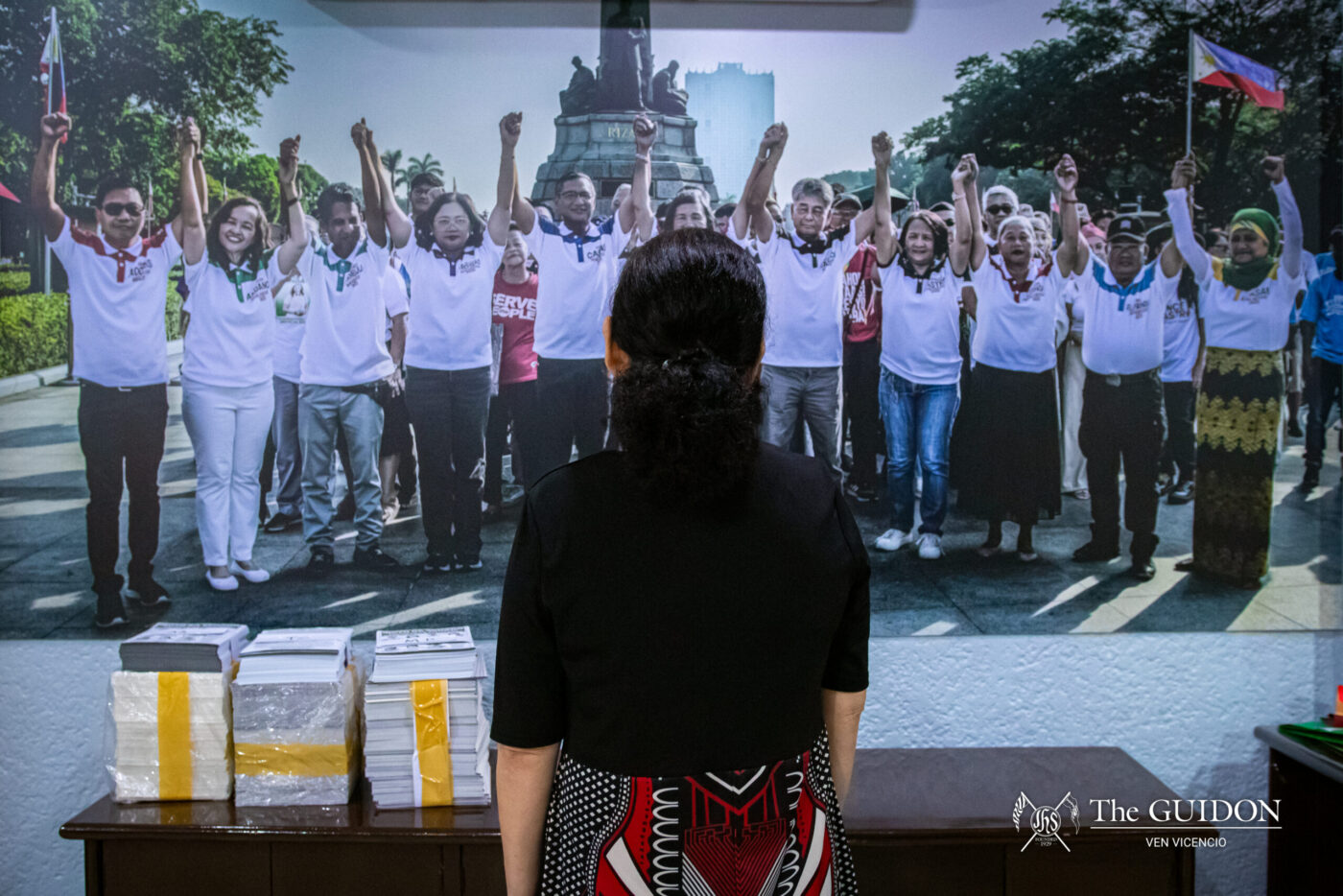
Everything in their headquarters came from volunteers or supporters. 61-year-old administrative volunteer Rosario Brenda Gonzalez recounts how her desk was salvaged from being discarded by the Bagong Alyansang Makabayan office. She also mentions that an old acupuncture table now holds stacks of their campaign materials.
No dice
People like Guevarra and Gonzalez make up Makabayan’s political base. Go notes that party lists like theirs, unlike dynastic campaigns with strongholds in specific regions, have no single geographic base.
For those like Makabayan, gaining traction means “stretch[ing] themselves from North to South.” However, limited funding still makes this difficult. Further hindering their efforts are rampant online disinformation and persistent red-tagging.
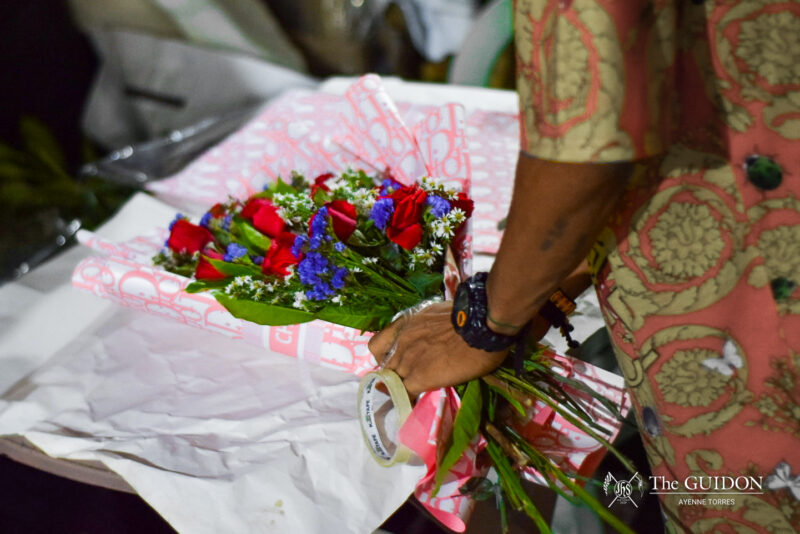
Despite these threats, they continue to change people’s perceptions of them through on-the-ground campaigns. Guevarra often goes house-to-house, handing out a pamaypay (fan) listing Makabayan’s National Democracy program and 11 senatorial candidates.
Though limited in number due to production costs, Guevarra takes pride in the fan because he believes the masses will hold onto it and remember Makabayan’s message beyond the 2025 Midterm Elections.
Back at headquarters, Gonzalez ensures that their machinery is running—managing schedules, finances, and day-to-day operations.
Playing percentages
Beyond dealing with Makabayan’s campaign troubles, Guevarra and Gonzales deeply root their volunteerism in their personal struggles.
Guevarra lives with fibromyalgia, a chronic disorder causing widespread pain. He describes flare ups as feeling like his cramping muscles are aflame, yet he continues his campaign duties through his tablet while lying in bed.
His parents were adamantly against his volunteer work given his condition. However, he persisted in his advocacies as they responded to his needs and sense of purpose. Eventually, his parents understood how he feels most alive doing what he does now.
Meanwhile, Gonzalez shied away from household tasks for most of her life. In the headquarters, she had to relearn activities like making coffee to help herself and those around her. These chores, she says, are her “strength and source of enjoyment” as the campaign helps her build practical skills while “being part of history.”
Last thing lost
In a race dominated by big names and bigger budgets, Makabayan pushes forward through its supporter base. “Less ‘yung pera namin. Pero in terms of the people that are actually on [the] ground, feeling ko mas marami pa kami sa kahit kaninong senador (Our funds are less. But in terms of the people that are actually on the ground, I feel that we have so much more than any of those senators),” Guevarra affirms.
Gonzalez adds that their programs and candidates send a clear message: unlike traditional politicians, they are guided by the shared aspirations of marginalized communities for better representation and governance. As such, Go underscores that the stakes are higher for party-lists like Makabayan because of the interests they carry.
Beyond winning seats, Gonzalez and Guevarra are driven to raise awareness of Makabayan’s programs. In succeeding to do this, they will have won a bigger battle.
“Sa puso at isipan ko, panalo na ang Makabayan. The mere fact na naipahayag niya ‘yung programa [ng National Democracy] niyan […] na nakalapit siya sa mga tao, sa akin panalo na (In my heart and mind, Makabayan has already won. The mere fact that it could declare [the National Democracy] program […] that it was brought closer to the people, means we already won),” Gonzalez asserts. Win or lose, they vow to continue advocating for reforms that could uplift Filipinos.
Their ideals and values continue to shape a vision for a more inclusive and empowered society. In a country where power often drowns out the marginalized, the clashes between the Davids and Goliaths will always define the landscape of Philippine politics. Yet, as long as Filipinos believe in their power—and cast their ballots with purpose—change remains within reach.