Years after Duterte’s regime, left-behind families of drug war victims struggle to reconcile that they must carry on with life, knowing their loved ones are gone forever.
Trigger warning: This article contains descriptions of violence and death.
SHE HAS told her story to countless media outlets, but nearly a decade later, Sheerah Escudero’s voice still breaks with grief as she recalls her younger brother’s brutal killing.
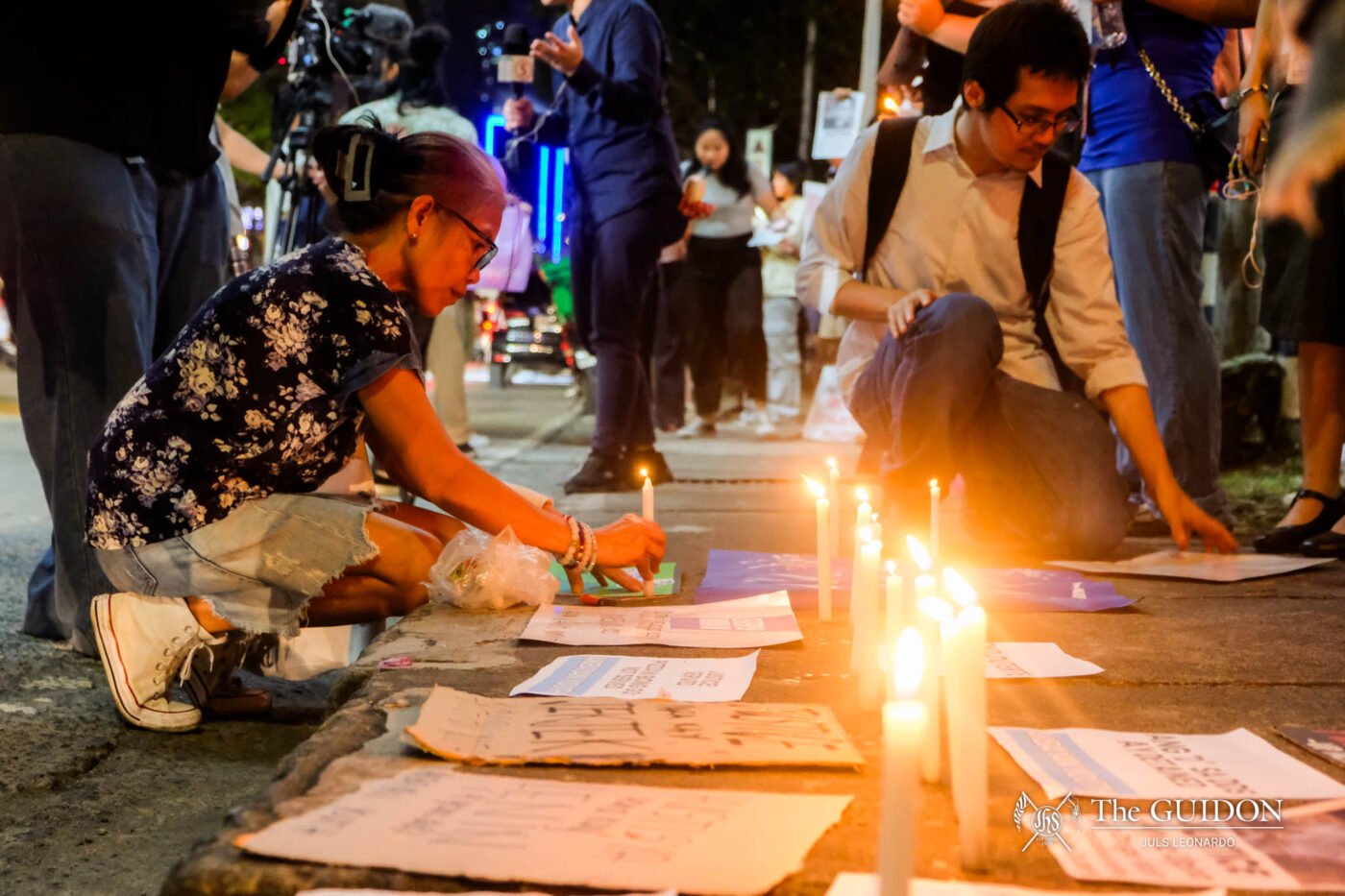
On April 6, 2025, during the launch of the White Ribbon Campaign at the Bantayog ng mga Bayani, Sheerah once again called for justice for victims of extrajudicial killings (EJKs).
Like the other bereaved families gathered that day, she carries the weight of her loss daily. Nearly eight years after their deaths, the first step toward justice only came with former president Rodrigo Duterte’s arrest by the International Criminal Court (ICC).
An unjust grieving
Sheerah’s younger brother, Ephraim Escudero, had been missing for five days before his corpse was discovered in Angeles, Pampanga in 2017—his hands tied, head with three gunshot wounds wrapped in bloodied tape. His family, who had been searching for him, learned of the unidentified body in a tabloid. At the funeral home, their worst fears were confirmed.
It was reported Ephraim had picked up a hitchhiker recently released from jail who was under police surveillance. That hitchhiker was later found dead in Porac, Pampanga—killed in similar fashion. An investigator told the family that Ephraim appeared to be nothing more than “collateral damage.”
Ephraim was just 18 years old, leaving behind a toddler and a newborn.
“Minsan nagtatanong sila, bakit namatay si Daddy nila. Bakit may bullet sa head ng Daddy nila. Hanggang ngayon hindi ko pa rin alam kung paano sasagutin (Sometimes they ask why their dad died, why there was a bullet in his head. Until now, I don’t know how to answer),” Sheerah says. The family has not told the children the truth of their father’s death, hoping to spare them from agony.
The unexpected loss of her playful younger brother brought a constant, recurring emotional struggle. Her voice faltering, Sheerah says that despite telling the story for almost a decade, the pain does not dissipate.
Dahlia Cuartero, from San Jose del Monte, Bulacan, shares that same grief. Her 26-year-old son, Jesus Cuartero, never came home one night in 2019 after meeting with his boss.
Anxious about his disappearance, they searched many funeral homes until they found Jesus’ body, along with another man who was on the drug watch list. That was when rumors surrounding his involvement in a buy-bust operation circulated.
The months following his death saw no end to the tears Dahlia wept for her child. “Siya talaga ‘yung nakaalalay sa akin. Kaya ganun kasakit (He is the one who supports me. That’s why it hurts so much),” she says.
The grief was worsened by how seemingly impossible it was to bring justice for his death. She was left more heartbroken after being told to let the case go due to the lack of witnesses.
The family’s only hope has been for the ICC to make a strong case against Duterte, who instigated the drug war. In the absence of justice in their home country, they share their stories with the media and seek support from organizations and fellow victims.
Community care
In October 2017, the Escudero family gathered documentary evidence and sought help from Rise Up for Life and for Rights (Rise Up), an organization that supports families of EJK victims.
Apart from connecting them to lawyers for legal assistance, Rise Up also provides psychosocial support, helping families navigate their grief and trauma.
Like Sheerah, Dahlia also turned to Rise Up. “Kahit mahirap kami, willing naman kaming mag-demanda. Kaso, paano? Kahit tukoy ‘yung mga pulis na nagtatrabaho, hindi namin alam kung paano (Even though we are poor, we are willing to file a case. But how? The involved police were identified, but we do not know how to proceed),” she says.
Today, families of EJK victims face not only a broken justice system but also threats from online hate and disinformation.
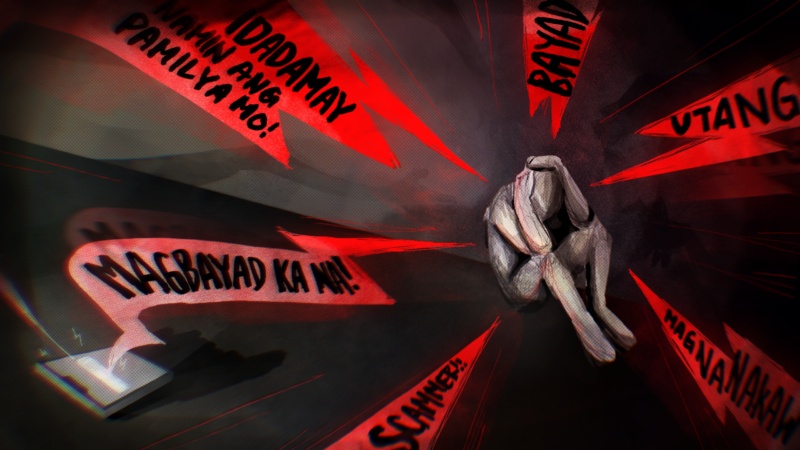
Dahlia herself was accused of being a negligent mother and a drug addict. She recalls receiving comments such as “Deserve na mamatay ang anak mo (Your son deserves to die.)”
On the day of the White Ribbon Campaign launch, Dahlia was supposed to fly back to her hometown in Davao City to celebrate her father’s birthday. However, she decided not to go, hurt that her immediate family members still supported Duterte.
“Kahit kapatid ko, parang galit sila sa pagkahuli kay Duterte. […] Hindi nila naisip na, ha, may pamangkin nga pala akong biktima,” she says.
(Even my siblings were angry at Duterte’s arrest. They didn’t think that they had a nephew who was murdered.)
With the help of the National Union of Peoples’ Lawyers, she filed a case with the National Bureau of Investigation for online bullying. Aside from legal assistance, Rise Up shouldered the travel, food, and printing costs so families like hers could keep fighting.
Despite the risks, what sustains these families is the support—moral, legal, and financial—from their respective communities. Dahlia, for one, is grateful to her neighbors for defending her against the bashing.
“Sabi ng mga kapitbahay namin, hindi niyo kilala ang pamilya niya. Napakabait niyan… Thankful ka na sa mga kapitbahay na pinagtatanggol ka,” she says.
(Our neighbors said, “You do not know them.” They were very kind to us. I am thankful to them for defending me.)
Sheerah also alludes to the significance of standing together during difficult times.
“Ito ‘yung panahon na kailangan namin, hindi lang ng mga kapwa naming biktima kundi ‘yung taong bayan na samahan kami, tumindig sa kung ano ‘yung tingin nilang tama at manawagan para sa hustisya. Kasi kung sa mga kaanak din nila nangyari ‘yun panigurado titindig din kami para sa kanila,” Sheerah says.
(This is the time we most need not just the support of our fellow victims, but also for the entire nation to join us in our fight for justice. Because if that happens to their families, I am sure we will stand with them.)
Path to justice and healing
When Duterte was arrested, left-behind families felt a sense of vindication but also immense sorrow.
“Hindi siya lubos na masaya. Kasi ‘yung pagkaaresto kay Duterte pinapaalala nun lahat ng dinanas namin nung rehimen niya (But it wasn’t all joy, because Duterte’s arrest made us relive our experiences during his regime),” Sheerah shares.
Also feeling emotional, Dahlia could not help but weep.
“Malaking kakulangan ‘yung nawala [si Jesus] sa amin. Masakit dahil anak ko siya eh. Doon sa three months na pagkamatay niya talagang walang humpay ‘yung iyak ko araw-araw… Hindi naman ako nagkulang. Lagi ko naman siyang inaalalayan,” she says.
(His death left a gaping hole in our life. It hurts because he was my son. Every day during the three months after his death, I cried nonstop. I did not lack as a mother. I made sure to assist him all the time.)
According to her, if it were true that her son committed the crime he was accused of, she would have preferred that he faced trial and due process instead. Even though Duterte’s imprisonment has not been finalized yet, she thinks his arrest would suffice for now.
Ultimately, aside from holding perpetrators behind bars, bereaved families aspire to move forward without forgetting the wounds. For Sheerah, she hopes not only for justice but also for them to experience healing.
Until then, she will continue to tell the story of how her loved one was mercilessly killed under a regime that showed no regard for human life and dignity.