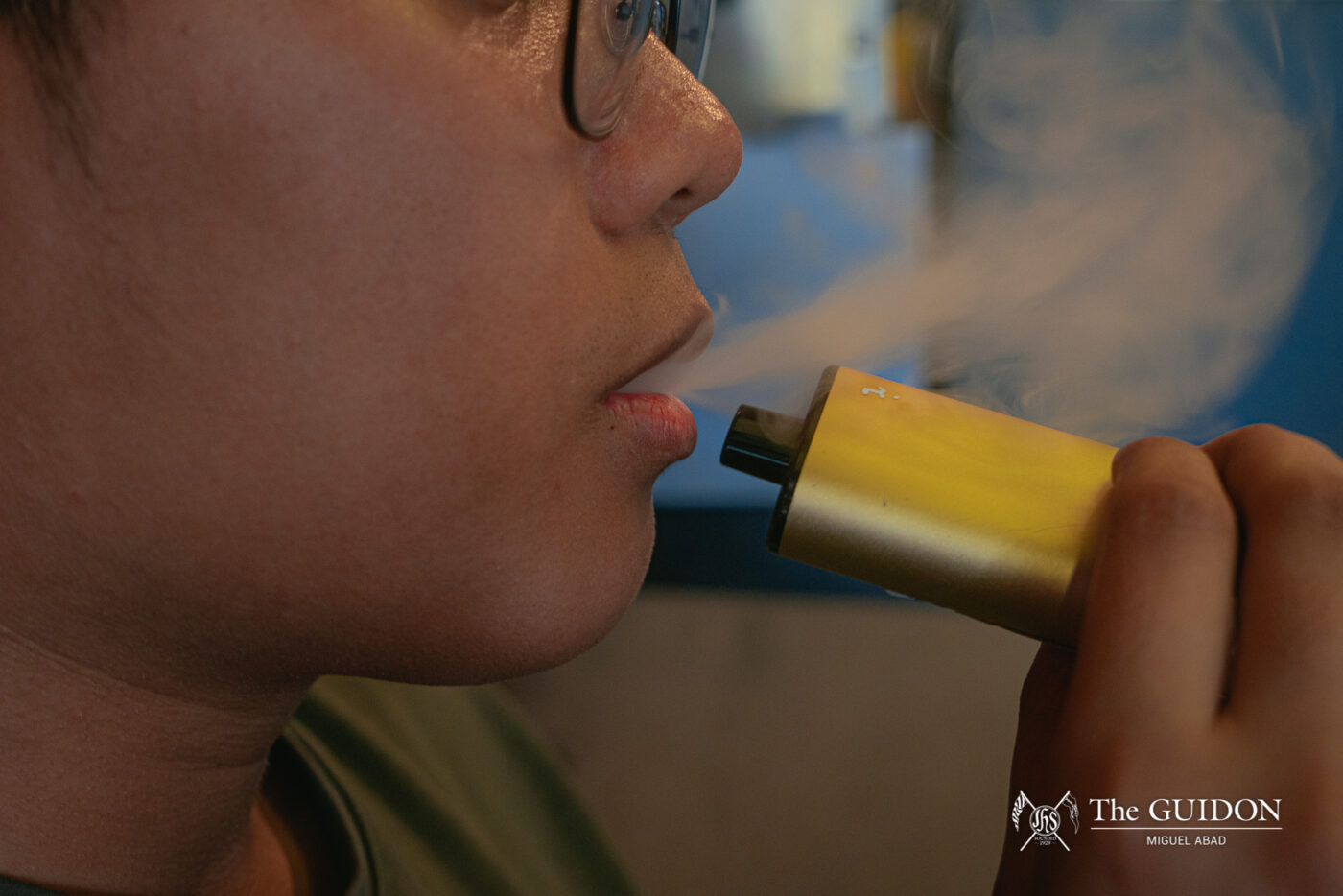
WITH INCREASINGLY accessible vapes flavored with popular food items, combined with sleek and trendy designs, e-cigarettes have established themselves as a popular product among Atenean circles despite national and University restrictions.
While the Department of Health (DOH) reported a steady decline in tobacco use in the country over the last decade, e-cigarettes and vapes tell a different story. According to the latest Global Youth Tobacco Survey, the usage surged from 11.7% in 2015 to 24.6% in 2019—a staggering increase in just four years.
Coping through clouds
The growing trend of vaping among the youth, particularly among higher education students, suggests a trend of repackaging nicotine delivery. For many Ateneans, vapes and e-cigarettes do not carry the same stigma as smoking due to their fruity flavors, pleasant smell, and social appeal.
Marie* (2 BS CH) shared that her exposure to smoking began at an early age, having grown up with her grandfather who regularly smoked at home. That familiarity extended into her teenage years, as she witnessed many of her peers getting into the vice. This early exposure, coupled with its growing use among her peers, eventually led her to experiment with vaping in college.
“When there are parties, it’s normal to smoke and vape. The more parties that I started to attend, I became more desensitized to the idea [of vaping],” Marie shared.
Echoing the same sentiments, Jake* (2 BS HS) considers himself a social smoker, often vaping with friends and acquaintances at gatherings and parties. Outside these events, he also shares that he regularly vapes, particularly during stressful weeks with his friends to cope with the demands of academic life.
Sweetening the deal
This sense of escape is further fueled with flavor varieties as existing studies show that e-cigarettes’ appealing flavors are among the top reasons young people try these products for the first time. A wide range of flavors from sweet, fruity, and dessert-like flavors has been specially designed to attract and hook adolescents.
Visual packaging adds another layer to the appeal. Many vape devices come in different designs resembling energy drinks, juice boxes, or milk cartons, effectively masking the harmful content within.
Despite regulatory provisions in the Vape Law that prohibit branding using fruit or cartoon character references, many manufacturers continue to use coded or vague language to evade detection and regulation.
When asked about advertising tactics, Tobacco Control and Governance Arm of the Ateneo Policy Center Project Coordinator Sam Ackary discussed how these trends help cultivate the perception that vapes are safer and more fun alternatives to cigarettes.
“The way that these products are marketed [is by presenting them] as something that’s fun, something that can help relieve your stress, something that is social,” Ackary said.
Despite these playful and appealing branding, e-cigarettes and vapes are not harmless. These devices, upon heating up the vape fluid, produce an aerosol containing nicotine and other cancer-causing chemicals that even bystanders can inhale.
One of the most serious conditions associated with vaping is the e-cigarette or vaping product use-associated lung injury (EVALI), a potentially fatal illness linked to substances found in certain vape liquids.
Just last 2024, the DOH reported the first documented case of vaping-related death in the country. A 22-year old male, described by the health agency as a “healthy and sporty” regular vape user, succumbed to an EVALI-triggered heart attack the previous year.
Addressing the vaping trend
Beyond the risk of lung injury, vaping also poses significant neurological concerns. Nicotine addiction and dependence can affect brain and cognitive development in adolescents and young adults. Even exposure to the chemical can harm parts of the brain that control attention, learning, mood, and impulse control.
“We found that [in] a lot of the e-cigarette products that we collected and studied, it was unclear how much nicotine was in the product. They wouldn’t specify it on the device packaging, so you actually don’t really know how much nicotine it is that you are taking in,” Ackary said.
She also emphasized that regulatory and enforcement loopholes have left vape products easily accessible to minors, often through online platforms. Many vendors fail to verify age, while flavored vape variants continue to circulate using ambiguous branding or unlisted ingredients.
At Ateneo, University policies have fully banned smoking and vaping within the campus premises since 2013. However, enforcement is challenged by discreet usage, peer normalization, and a lack of reporting mechanisms.
While vaping feels ambient with its sweet-smelling, ever-present, and accessible nature, behind every puff is the lingering risk that makes the air a little heavier for everyone around to inhale.
Editor’s Note: The names of the interviewees have been changed to protect their identity and privacy.