EVER SINCE high school, I have always been told that the job of a photojournalist is one of the easiest in a publication—reduced to simply pointing a camera at the subject and calling it a day.
However, the click of a shutter goes beyond the responsibilities of a photojournalist. Photojournalism does not only compliment the stories we write; it is paramount to capturing the truth and providing perspectives that words cannot convey.
In every journalism contest I joined during high school, there would always be talks with professional photographers before the competition proper. They emphasized how composition rules, such as rule of thirds and leading lines, are crucial in doing our deliverables as photojournalists, as these determine how influential the elements are arranged in enhancing the photo’s visual impact to its audience.
While I truly agree that composition rules create visual harmony, photojournalism should not just be about the visual elements, but also how our photos chronicle the story of the events we cover. Being a photojournalist in a publication holds a responsibility to document history—providing undeniable evidence of the events that transpired. This role not only demands technical skills, but also requires empathy and a deep understanding of the people involved and what they are fighting for.
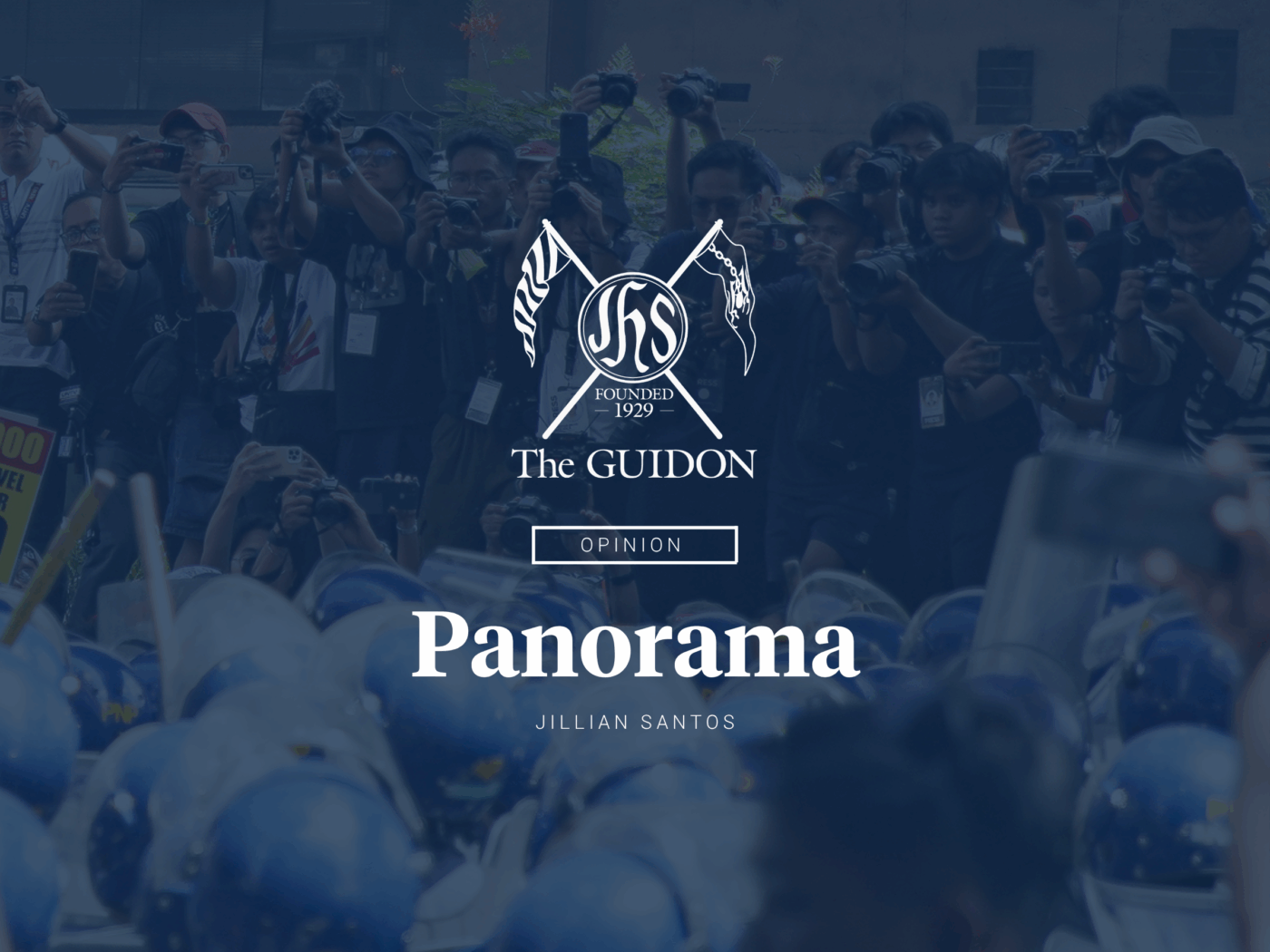
In protest coverages, for instance, there is a range of emotions being shown, from peaceful moments to heightened tensions. Publications typically show protesters with their signs and banners, interactions between law enforcement and protesters, and sometimes cases of violence. Together, these photos display a collective presentation of struggle and a cry for help for their stories to be known by the masses. Along the lines of history, these struggles enable future generations to understand the context and human experiences in a more tangible way.
As a photojournalist for eight years, I have been exposed to countless photographers and their work focusing on the realities seen here in the Philippines. One of the works that truly caught my attention was Raffy Lerma’s “Pieta,” showing a photo of a woman crying over her partner’s lifeless body during Duterte’s War on Drugs. That single photo, published across multiple media outlets, has already gone down in history—and will undoubtedly continue to do so.
As photojournalists, our cameras are not just our tools—they are vessels of truth. It is our duty to ensure that the photographs we capture not only uphold the highest journalistic standards but also spark public discourse and convey stories that might be otherwise lost in written narratives.
Jillian is a third-year Communications Technology Management student at the Ateneo de Manila University. With her strong passion for photography, she continuously strives in the pursuit of leveraging visual storytelling in her work as a photojournalist.
Editor’s Note: The views and opinions expressed by the opinion writer do not necessarily state or reflect those of the publication.