Photo courtesy of Wok C. Alpajaro
Nothing is beautiful at 4 AM. The McDonalds along Katipunan Avenue can get especially lonely at such an ungodly hour, but n ot this day. The Loyola Mountaineers (LM) gathered together, excited for the weekend’s expedition: Mt. Gulugod Baboy in Batangas.
Among the LM members, there were also first-time climbers—myself included—nervous about facing the unknown, but eager for the adventure.
Mountaineering 101
Before leaving, Team Leader Mita Veloso fretted about, making sure that there was enough money to get her team to the mountain. Meanwhile, the Group Leaders under her checked how the climbers packed their bags. Before each open climb, LM holds seminars to prep first-timers on what to bring and what to do during the trek, as well as information on mountaineering terms and hand signals.
Logistical concerns and packing problems aren’t what one usually associates with the great outdoors, but efficiency is a vital part of mountaineering. Every detail—from the weight of a pack to how its contents are stacked—is accounted for. After all, trying to set up camp without tents or drinking without a canteen would be less like mountaineering and more like an episode of Man vs Wild.
In 1982, a team under the leadership of Art Valdez hacked their way up and through the wilderness of Mt. Gutling-Gutling, making headlines as the first to summit what was considered one of the most challenging climbs in the Philippines. Recently, Romi Garduce completed the Seven Summit challenge, climbing to the highest peaks of all seven continents. Despite these feats, the popularity of mountaineering has been sporadic in the Philippines, as many still see mountaineering as an extreme sport and are too intimidated to try it.
However, the arrival of equipment brands like The North Face or Deuter in the mid-90s to early 2000s made mountaineering more accessible as a sport. With this, mountain climbing gained popularity among college students and yuppies. University-based mountaineering groups offer open climbs to those unsure of whether to pursue the sport as well as those simply looking for a weekend adventure. For those aiming higher, membership lets one train to climb the more challenging mountains.
Fresh graduate Pia Ranada has been climbing with LM since her second year of college; she shares that the thrill comes from seeing the world from a different perspective. From the top of Mt. Apo, the Philippines’ highest peak, everything looks so small. “It’s like you’re on Mt. Olympus,” she laughs. To those afraid of the sport’s physicality, she says, “Anyone with any body type can try this, as long as you train. It proved to me that I’m physically fit despite being payatot.”
In action
We reached the base of Mt. Gulugod Baboy at 11 AM. The other climbers referred to the base as the “jump-off point”—where motorized transportation ended and climbing began. Quietly focused on the trail, our Group Leader, VT Camacho, guided the climbers up the mountain.
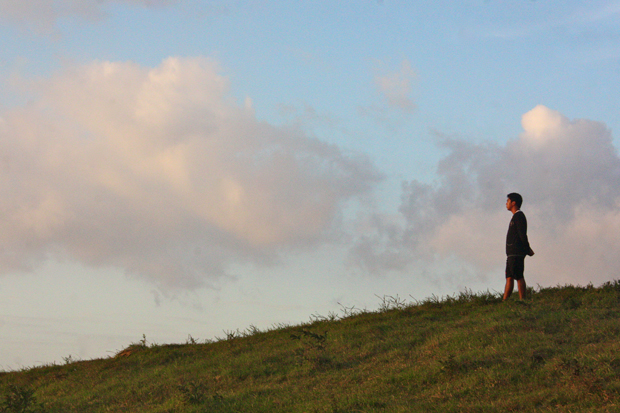
Mountaineering isn’t just a question of going up or down; the entire team had left their city lives behind and traded the comforts of home to scale a mountain and live in a forest. It’s not just a weekend adventure that’s being offered here, but the idea of total freedom.
For alumna Lori Lofranco, this space gives one time to think. “You get to escape the humdrum of city life,” she explains. Meanwhile, Ranada says the experience of climbing changed her life: “I developed a close bond with nature. Now, I work to help protect the environment, which is one of LM’s core advocacies.”
The hike was quiet, but every so often, I’d hear Camacho call out “rebound!” meaning a branch bent out of the way was primed to swing into me. I heard someone sing a few lines of Miley Cyrus’ “The Climb” and let out a sigh because I knew it wasn’t the last time I’d hear the song that day. I asked a fellow climber how much farther it was to the top. He replied sardonically: “It’s walking distance.”
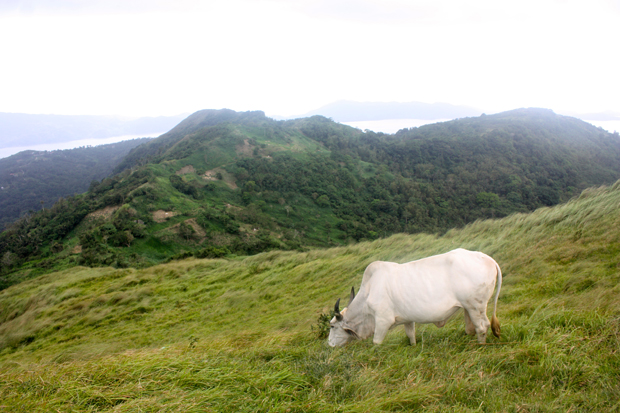
A mixture of excitement and exhaustion ran down the line of climbers as the forestry began to clear and we saw the triple peaks of Gulugod Baboy. In a way, Miley Cyrus’ corny description of a metaphorical climb can have a far more literal meaning to mountaineers. As exhilarating and fulfilling as reaching the peak is, the reward is in the journey that took one there.
Reaching the top
The knowledge that the highest peak of Mt. Gulugod Baboy is 525 meters above sea level was daunting, even if the beginner-level climb lasted for only half a day. To us exhausted first-time climbers, Gulugod Baboy might as well have been a million meters high.
Reaching the peak of a mountain is no small task. Camacho shares that the feeling is one of an unspoken challenge from the mountain to the climber. “[We climb the mountain] because it’s there,” he says. Lorenzo Doromal adds, “You know you’re into this when you’re past just [wanting] the nice view. Mountaineering becomes a part of you.”
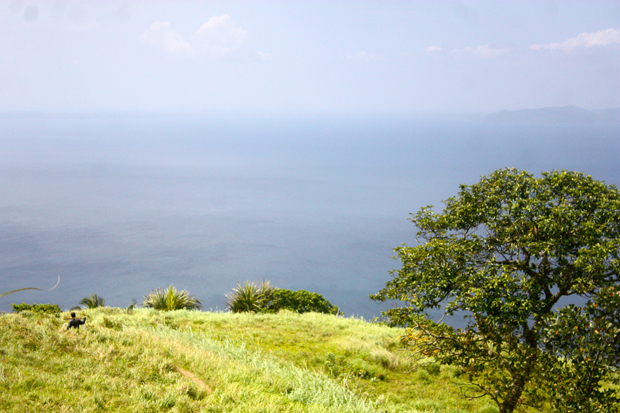
By the time night fell on Mt. Gulugod Baboy, our group had started to cook dinner using a portable stove. The only light in the camp came from our flashlights and lamps; everything was dark, except for the lights of a faraway town. Apart from reconnecting with nature, mountaineering offers one the opportunity to connect with people as well. “It’s not just about climbing. I once thought it was just that, but it really bonds people. We’re like family after a climb,” says Veloso.
The big finish
In many ways, mountaineering is the counterculture. It challenges the conventions of everyday life—from indoor plumbing to gravity—and involves abandoning the urban definition of civilization and technology in favor of traveling to a faraway mountain, climbing it, and yes, living on it.
Perhaps mountaineers challenge convention by simply choosing to climb mountains at all. In the words of Cherilyn Sy, “It’s addictive. After you climb one mountain, you want to climb them all.”
Editor’s Note: The editor would like to thank Nadine Ramos for her significant contribution to the creation of this article.
-
- Photo by Wok C. Alpajaro
-
- Photo by Wok C. Alpajaro
-
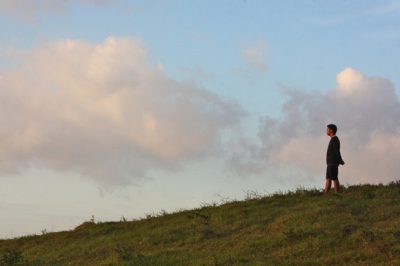
- Photo by Wok C. Alpajaro