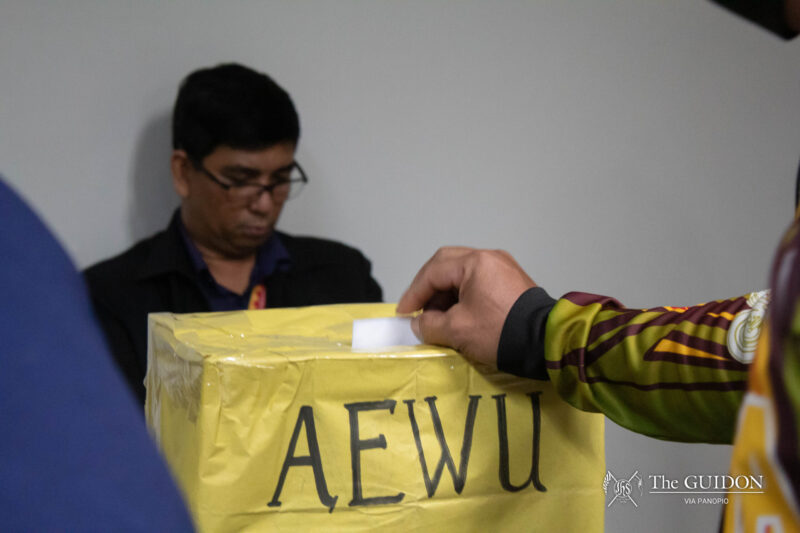
A MAJORITY of sophomores believe that the Introduction to Ateneo Culture and Traditions (Intact) freshman course is unnecessary, the results of the Sanggunian Grand Consultation survey reveal. The said respondents explained that they would rather have taken the National Service Training Program (NSTP) in lieu of Intact during their freshman year, in order to lessen the load during their sophomore year.
Sanggunian President Drew Copuyoc presented the Sanggunian Grand Consultation’s findings in a school forum last November 18, with the focus on Ateneans’ perception of the Integrated Non-Academic Formation (INAF) programs.
The survey, which the student council administered last semester, included questions regarding students’ concerns about the INAF programs, extra-curricular and organizational activities, and administrative services on campus.
Intact is “unnecessary”
More than half of the sophomore respondents (54%) said that Intact was not essential in their adjustment into college life. Three-fourths agree that it was merely a homeroom session and a time to do activities with their block.
The Ateneo’s identity, as packaged through Intact, is still unclear to sophomore respondents, who confused Intact’s objectives with self-help. They also noted that neither the sessions nor the facilitators were engaging, and that the Intact experience was altogether forgettable.
Respondents suggested having orientations on undergoing various school processes or availing of services in the Loyola Schools, such as reserving venues, renting lockers, and shifting courses. They also wanted Intact to help cultivate school spirit by incorporating more lectures on the Ateneo culture, such as on the school’s history, songs and cheers.
NSTP and JEEP get thumbs up
Third year students, on the other hand, were generally satisfied with NSTP. 58% agreed that although NSTP was a required course, “[NSTP] helped them become more socially aware and involved,” according to the report. 58% of the juniors surveyed also strongly agreed to integrating service-learning into NSTP, pointing to a desire for sustainability in their service for the community.
However, respondents also raised a number of concerns about NSTP. Around half of the respondents believe that NSTP was costly to them. Several students also questioned the grading system, which provided for the granting of numerical grades based on the quality of service that the students rendered. They suggested having a Pass or Fail grading system instead.
The report also mentioned that some students do not enjoy the program, but “realize its value in their serving the community.”
Meanwhile, based on the responses of the surveyed seniors and superseniors, the Junior Engagement Program (JEEP) was considered generally effective in exposing Ateneans to the realities of labor. However, the respondents felt that the 12-hour requirement for JEEP was not enough, resulting in “a minimal formative effect on students because of their lack of engagement.”
Respondents also said that a better enlistment system for JEEP was needed because the current system is “disorganized and unfair.” They suggested using a system similar to the Ateneo Integrated Student Information System.
While JEEP is integrated into core philosophy courses, 25% of respondents said that the experience did not contribute to a deeper understanding of their philosophy classes. They suggested that JEEP be integrated with other courses, such as to the Introduction to Sociology and Anthropology or to Organizational Behavior.
Plans for improvement
The results of the Grand Consultation have already been presented to the Vice President for the Loyola Schools, John Paul Vergara, as well as to the Office of the Associate Dean for Student Affairs (ADSA). The results are yet to be shown to the Office for Social Concern and Involvement as of press time, according to Copuyoc.
Copuyoc also said that the input from the survey would be used to improve the INAF program, which may soon be changed into the Holistic Student Formation program.
“Dr. Vergara [said] that it doesn’t necessarily have to be ‘non-academic,’ because even your academics can play a big role in formation,” Copuyoc explained.
Thus far, no date has been set for the revamp of the INAF program. “It can’t be done in just one month, because if you want to involve academics, you have to talk to the department chairs,” said Copuyoc.
Data for the INAF survey was gathered through the course and block representatives to the Sanggunian. Focused Group Discussions on the program were first conducted last year, for initial feedback. The data was presented to ADSA, who requested for more reliable data since it deemed FGD results to be too qualitative. The Sanggunian then conducted the survey to collect quantitative information.
Approximately 26.6%, or 1595 out of 6000, of the student population was surveyed. Students from all year levels except for freshmen were surveyed, as first year students had not yet completed at least one INAF program.