Green Pastures
jigual@theguidon.com
Sinabaw ako.
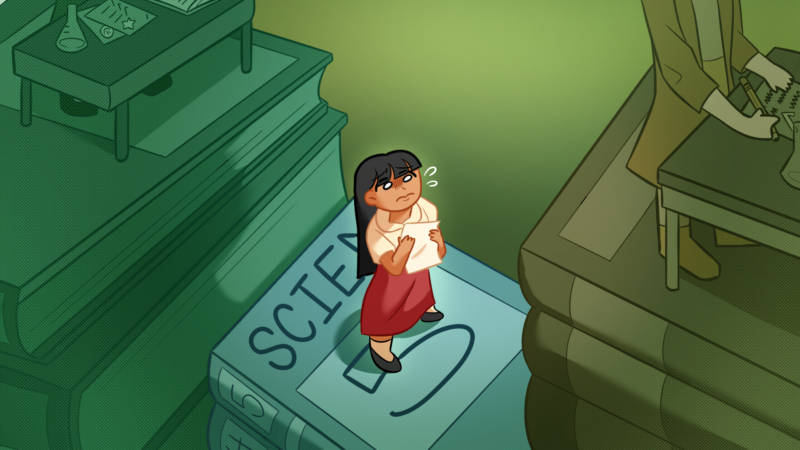
The famous post-orals and post-exam line we’re all fond of using. While it’s become a favorite expression for a lot of students, it’s become the perennial excuse of all those who have not performed to a certain standard or worse, failed completely.
The term has become a wonderful excuse for us because we do not like the feeling of being ashamed. We don’t seem to admit that our wrongdoings stem from a lack of preparation or from careless mistakes. There seems to be a need to put someone or something constantly at fault for our wrongdoings. Dismissing these as our brain’s fault seems to free us from culpability and gives the impression that our misfortune is beyond our control.
But digging deeper is it actually possible for our brain to suddenly stop comprehending information during an important test? Is it possible for us to suddenly forget everything we learned during the defining 10 minutes of the semester at an oral exam? While the odds are very low that one’s brain will suddenly stop working, shouldn’t it be that when we’re psyched up for a test or orals our brains should likewise work properly?
Now there are times when I’d use that as an excuse for various reasons. But after being in positions of leadership, I realized that such an excuse is unforgivable. It’s not a good excuse because then you can’t provide constructive criticism. Such an excuse affects so many things in one’s improvement.
For one thing, the value of preparedness is forgotten. The line makes someone seem to live in the moment and not consider the effects of prior practice. But think about it, if there’s proper preparation before any exam or presentation, then you will perform well. Being sabaw and using it as an excuse only gives us a scapegoat to hide the fact that we did not prepare properly for something.
We can also say that objectivity and accountability are gone as well. Using sabaw puts the blame on something besides our own selves. We can’t seem to admit that we didn’t study hard enough, nor read the instructions or questions properly, nor understood the our readings. We deflect responsibilities to those beyond ourselves because we don’t want to be embarrassed.
But most importantly that opening for improvement disappears. By not admitting to our mistakes, we do not learn from them. We can’t blame the sudden inability of our brain to comprehend information at a given time. To perform better, we need to learn how to do better and the first step is by being accountable to ourselves. To move forward, we must improve on a daily basis.
The next time we say sinabaw ako, we should think twice and realize the mistakes we’ve made, and move forward. Are we using being sabaw as an excuse for our wrongdoings? If that’s the case, then it’s time to stop that old habit and become answerable for the things that are in our control and not blame certain phenomena for our failures. When we look at it, in the end, our mistakes and shortcomings will only make us stronger, and should not make us be afraid to be the change we want to see.